How Does Upside Make Money? A Complete Business Model Guide
The Upside app helps people earn cashback on everyday purchases, including gas, groceries, and restaurant meals. Users can claim offers, make eligible purchases, and earn rewards without a subscription fee. So, how does Upside make money if the app is free?
The answer lies in partnerships with participating businesses. Upside helps retailers attract customers, increase purchases, and track promotional results. In return, it earns revenue through performance-based arrangements tied to the value it delivers.
This model benefits everyone: customers earn cashback, retailers gain potential sales, and Upside generates revenue by connecting consumers with businesses. It also offers useful lessons for entrepreneurs exploring cashback apps and digital marketplaces.
What Is the Upside App?
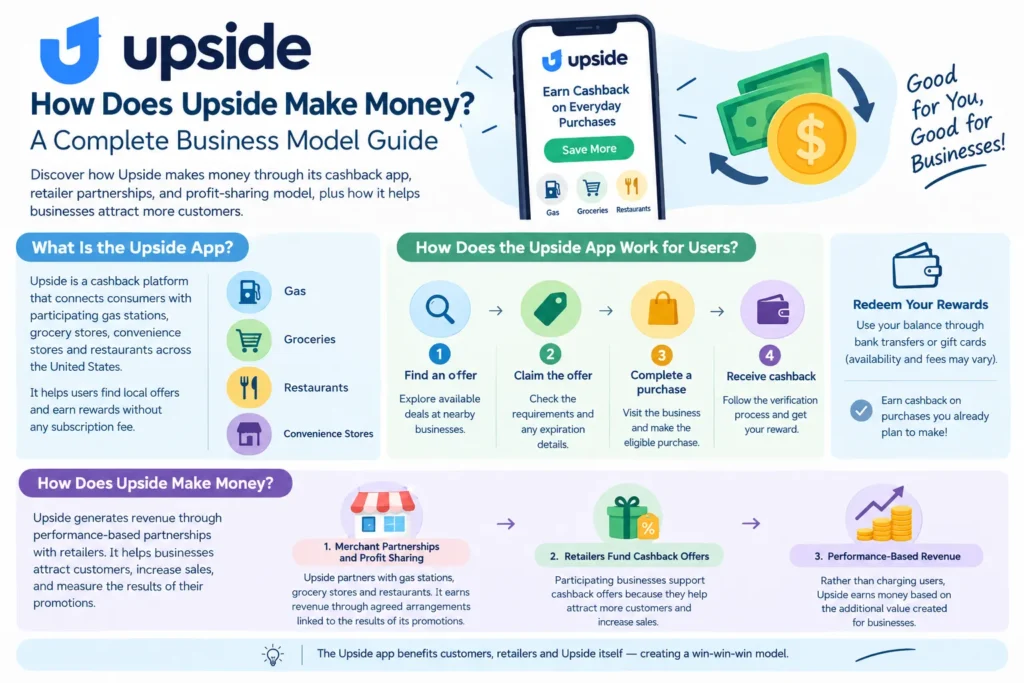
Upside is a cashback platform that connects consumers with participating gas stations, grocery stores, convenience stores, and restaurants across the United States. Users can find local offers and earn cashback on eligible purchases. For example, drivers can check the app for gas station deals, claim an offer, and follow the steps to receive their reward.
The app also offers cashback on groceries and dining, helping users save on everyday expenses without buying unnecessary items. Businesses benefit by attracting new customers and encouraging purchases through targeted cashback offers instead of relying only on traditional advertising.
How Does Upside Make Money App Work for Users?
Using Upside is relatively simple. Although the exact requirements can vary by offer, the process generally involves four steps.
Find an offer:
Open the app and explore available cashback deals at participating businesses near you.
Claim the offer:
Select a deal and review its requirements, including any purchase conditions or expiration details.
Complete an eligible purchase:
Visit the business and make the required purchase according to the offer’s instructions.
Receive cashback:
Follow the verification process so the qualifying transaction can be confirmed and the reward credited.
Depending on the offer, users may need to submit a receipt, check in, or follow another verification method. Reading the conditions before making a purchase helps avoid confusion about whether a transaction qualifies.
After earning rewards, users can redeem their eligible balance through supported withdrawal options, which may include bank transfers or gift cards. Available methods, minimum withdrawal requirements, and any applicable fees can vary.
The main attraction is that users can earn cashback on purchases they were already planning to make, while participating businesses gain another way to attract customers.
How Does Upside Make Money?
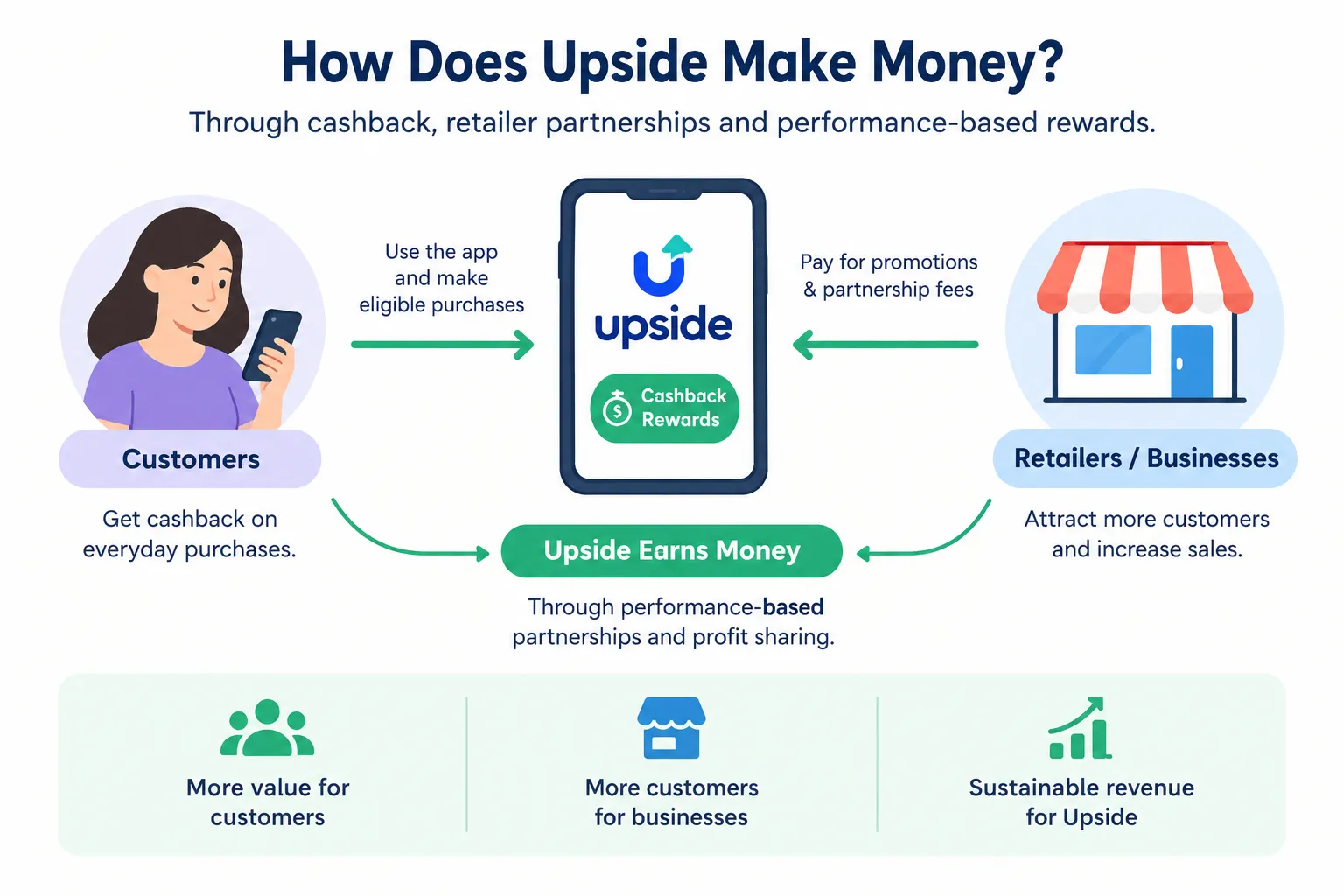
How Does Upside Make Money money through performance-based partnerships with retailers. Businesses use the platform to attract new customers, promote their locations, and increase sales. Instead of charging users a subscription fee, How Does Upside Make Money earns revenue by helping businesses achieve measurable results.
Its business model focuses on incremental profit, which means the additional value generated by promotional offers. The exact payment terms vary by partnership, so retailers may pay different fees depending on the results and value How Does Upside Make Money provides.
1. Merchant Partnerships and Profit Sharing
Merchant partnerships are central to Upside’s business model. Gas stations, grocery stores, and restaurants offer cashback deals to attract customers and increase sales. For example, a gas station may use Upside to encourage drivers to choose its location over competitors.
Upside earns revenue through agreed partnership arrangements, while businesses benefit from potential additional sales. However, results depend on customer behavior, reward offers, operating costs, and partnership terms.
2. Retailers Fund Cashback Offers
Participating retailers support cashback offers to attract customers and increase sales. For example, a restaurant may offer cashback during quiet hours to encourage more visits.
Customers earn rewards by meeting the offer’s conditions, while Upside manages the promotional process. Retailers must ensure that the additional sales justify the cashback rewards and platform fees.
3. Measuring Incremental Sales
Incremental sales are purchases that happen because of a promotion but might not have occurred otherwise. For example, a driver who switches to a participating gas station because of an Upside offer may generate additional business.
Upside uses test-versus-control methods to estimate promotional impact by comparing customer behavior across groups. This helps retailers evaluate whether their campaigns create meaningful business value.
4. Personalized Offers and Location-Based Targeting
How Does Upside Make Money app uses relevant offers and location-based targeting to connect users with nearby participating businesses. For example, drivers may see gas deals, while other users may prefer grocery or restaurant offers.
Personalized promotions can encourage customers to claim deals and visit retailers. Businesses can also evaluate which offers perform better to improve their campaigns and manage promotional spending.
These features support Upside’s main revenue model by helping businesses reach suitable customers and encouraging purchases that may generate additional profit. Personalization and targeting should be understood as tools that strengthen the core model, rather than automatically treating them as separate revenue streams.
How Does Upside Generate Revenue in Practice?
Upside’s business model is easy to understand through an example. A restaurant offers cashback through Upside to attract customers during quiet hours. Customers claim the offer, make eligible purchases, and receive their rewards after verification.
The restaurant evaluates whether the promotion generates enough additional profit to cover cashback costs and platform fees. For example, if a campaign earns $100 in additional profit before expenses, the restaurant subtracts these costs to calculate its remaining benefit. This is a hypothetical example, not an actual Upside commission rate.
Upside earns revenue through its partnership agreements with businesses. Actual results depend on campaign performance, reward costs, and agreed fees. This model helps retailers attract customers while allowing Upside to earn from the value its platform creates.
What Makes Upside’s Business Model Different?
Traditional advertising platforms may charge businesses for impressions, clicks, or advertising placements. These activities can help increase brand awareness, but they do not always result in additional purchases.
Upside places greater emphasis on measurable business outcomes. Its retailer-focused model aims to connect promotional spending with incremental sales and profit.
This creates a relationship in which each party has a clear reason to participate. Consumers receive cashback, businesses seek additional profitable sales, and Upside earns revenue by helping connect the two groups.
The model does not guarantee that every campaign will succeed. Retailers still need to evaluate their costs, and consumers must follow the offer requirements to receive rewards. However, focusing on measurable results gives businesses a way to assess the value of their promotional activity.
Why Businesses Choose Performance-Based Promotions
Performance-based promotions help businesses attract customers while tracking marketing results. For example, a convenience store can use targeted cashback offers to encourage visits without committing to a large advertising budget. Upside’s retailer model emphasizes incremental results rather than fixed monthly or startup fees, but businesses should review partnership terms to understand applicable costs and payment arrangements.
This focus on performance can make the platform appealing to businesses that want a clearer connection between marketing expenses and commercial results.
Does Upside Sell User Data to Make Money?
How Does Upside Make Money uses transaction and shopping data to verify eligible purchases, personalize cashback offers, and measure promotional results. This helps the platform connect users with relevant deals and estimate whether retailers gain additional sales. However, data collection does not automatically mean a company sells users’ personal information.
According to Upside’s published privacy information, the company does not sell users’ personal information to third parties and discusses protections for retailer transaction data. Users should review the current privacy policy to understand data practices and available choices. Upside’s primary revenue model focuses on retailer partnerships, not on selling personal data without reliable supporting evidence.
1. Create Value for Customers and Businesses
A successful cashback platform should meet the needs of both sides. Customers want simple ways to save money, while retailers want to attract shoppers and generate additional sales. Providing value to both groups can make the platform more useful and competitive.
2. Build Trust Through Reliable Rewards
Customer trust is essential for cashback apps. Users need clear offer conditions, accurate transaction tracking, and a simple reward redemption process. Businesses also need transparent promotional costs and useful information about campaign performance.
How to Build a Sustainable Cashback Business Model
1. Calculate Costs Before Launching
Entrepreneurs should estimate the main costs of running a cashback app, including customer acquisition, cashback rewards, payment processing, technology development, customer support, and fraud prevention. Understanding these expenses helps founders plan a realistic budget.
2. Develop Strong Merchant Partnerships
Participating businesses are essential to a cashback platform’s success. Without enough useful offers, customers may lose interest. Similarly, retailers need an active user base to justify their promotional spending. Starting with a small group of local businesses can help founders test demand before expanding.
3. Track Transactions and Prevent Fraud
Accurate transaction verification helps ensure that customers receive rewards for eligible purchases. A reliable system should confirm qualifying transactions and detect fraudulent claims. Without these safeguards, incorrect payments can increase costs and weaken customer trust.
4. Keep Cashback Offers Simple and Clear
Customers should understand which purchases qualify, how cashback is calculated, and when rewards become available. Clear conditions reduce confusion, improve the user experience, and help prevent disputes between customers and the platform.
5. Monitor Profitability and Improve Campaigns
Entrepreneurs should regularly review campaign performance, reward expenses, and operating costs. Each promotion needs to generate enough value to cover its expenses while supporting a sustainable profit margin. Testing different offers can help businesses identify which campaigns work best.
Conclusion
How Does Upside Make Money primarily makes money through partnerships with participating retailers and performance-based arrangements linked to the value its promotions create. Businesses use the platform to attract customers and encourage purchases, while consumers earn cashback on eligible transactions.
This model shows how a free cashback app can generate revenue by solving a business problem for retailers. Its success depends on useful offers, reliable merchant partnerships, accurate transaction tracking, and effective cost management.
For entrepreneurs, the key lesson is to focus on measurable value rather than downloads alone. A cashback platform has a stronger foundation for long-term growth when it benefits customers and businesses while keeping its operating costs under control.