
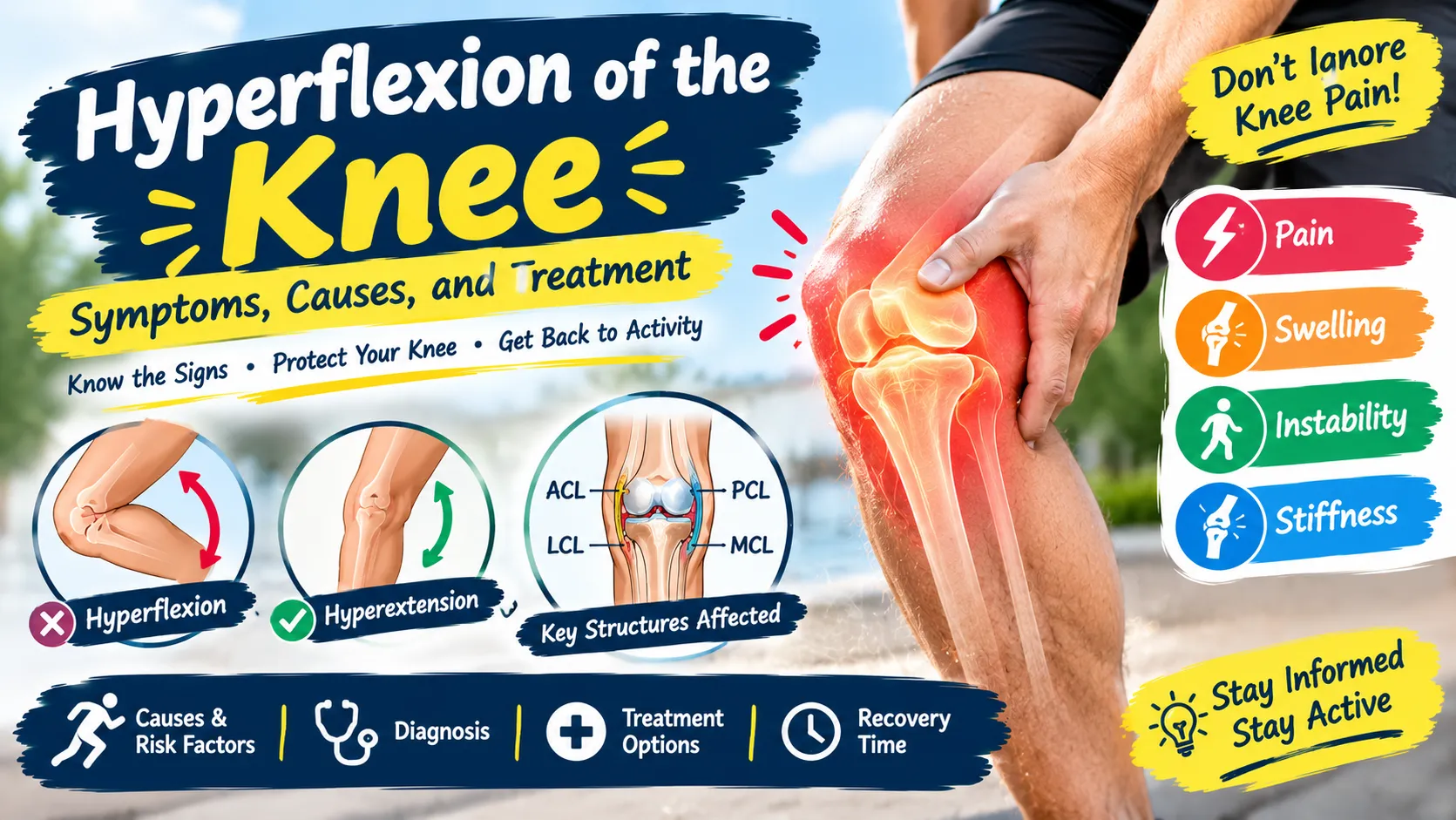
Hyperflexion of the Knee: Symptoms, Causes, and Treatment
Hyperflexion is a movement in which a joint bends beyond its comfortable or usual range. When it affects the knee, excessive bending may put stress on ligaments, cartilage, and other structures that help the joint move and remain stable. The injury can happen during sports, falls, awkward landings, or activities that place heavy pressure on a deeply bent knee.
Not every deep knee bend causes an injury. However, sudden or forced movement can lead to pain, swelling, stiffness, or difficulty walking. Understanding knee joint flexion, recognizing warning signs, and knowing when to seek medical care can help you make informed decisions about recovery.
What Is Knee Hyperflexion?
Knee joint flexion describes excessive bending of the knee, especially when an external force pushes it into an unusually deep position. The knee normally bends during activities such as sitting, squatting, kneeling, and climbing stairs. Problems may arise when the movement is sudden, forced, or combined with twisting or impact.
The severity depends on the force involved and the tissues affected. A mild injury may cause temporary soreness, while a more serious incident can damage a ligament, cartilage, or another joint structure. Because knee joint flexion is a description of movement rather than a precise diagnosis, a healthcare professional may need to examine the joint to determine the actual injury.
How Does Hyperflexion Differ From Knee Hyperextension?
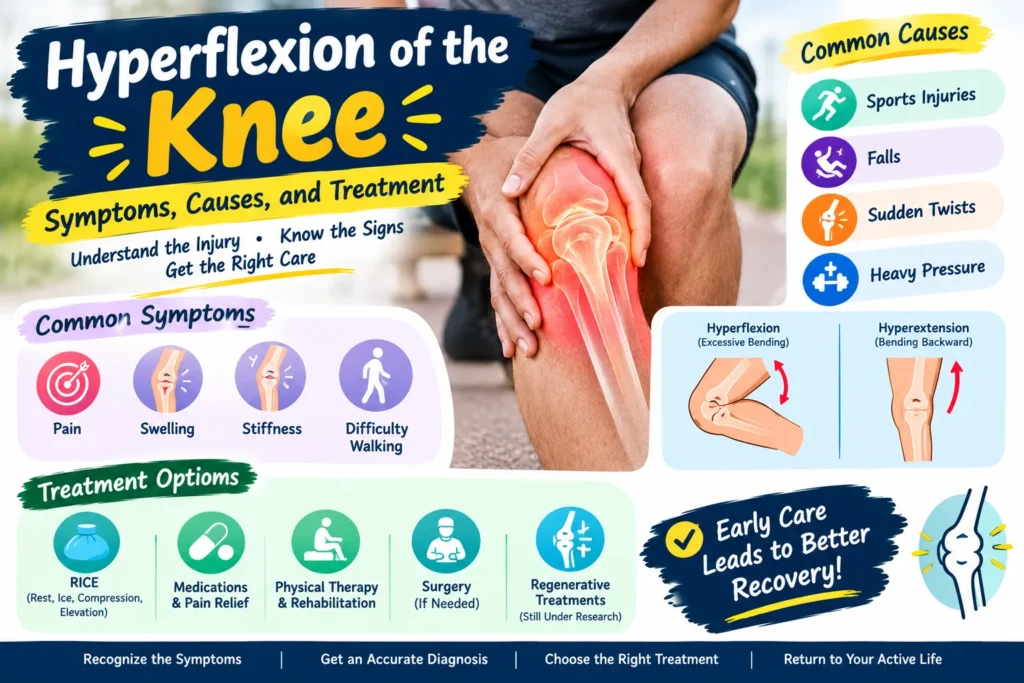
Hyperflexion and hyperextension describe movement in opposite directions. Joint flexion involves excessive bending of the knee, while hyperextension occurs when the knee is forced backward beyond its usual straight position. Both movements may place stress on supporting tissues, but the exact injury depends on how the knee moves and how much force is applied.
For example, landing awkwardly in a deep squat may place excessive pressure on a bent knee. By contrast, a collision during a sporting activity may force the knee backward. Either situation can cause pain, swelling, or instability. These symptoms do not automatically mean that a ligament is torn, so an examination is important when symptoms are severe or persistent.
Understanding Knee Flexion and Extension
The knee is a complex joint that allows the leg to bend and straighten. Muscles produce movement, while ligaments, cartilage, tendons, and other structures help support the joint and distribute forces. Normal movement allows people to walk, run, sit, stand, and participate in physical activities.
The comfortable range of motion varies among individuals. Problems are more likely when the knee is forced beyond its usual limits or moves under excessive load. Understanding the difference between flexion and extension helps explain why both excessive bending and backward movement can contribute to knee injuries.
Flexion
Flexion is the bending movement that brings the lower leg closer to the back of the thigh. It occurs when you sit in a chair, kneel, climb stairs, or perform a squat. Several muscles coordinate this movement, while the joint’s supporting structures help maintain stability.
During a joint flexion injury, the knee may be pushed into an unusually deep bend, sometimes while the foot remains planted. The combination of bending, twisting, and body weight can increase stress on the joint. Pain during deep bending, particularly after an accident, is a reason to stop the activity and assess the symptoms.
Extension
Extension is the movement that straightens the knee from a bent position. It is necessary for standing and many stages of walking. The quadriceps muscles help straighten the joint, while supporting tissues guide and stabilize the movement.
Hyperextension occurs when the knee is forced beyond its usual straight position, often moving backward. This differs from joint flexion, although both injuries may involve damage to ligaments or other tissues. Persistent pain or difficulty straightening the knee should be assessed by a healthcare professional.
Which Knee Structures Can Be Affected by Hyperflexion?
The structures affected by knee joint flexion depend on the direction of movement, the force involved, and whether the knee twists or receives a direct impact. The joint contains four major ligaments: the anterior cruciate ligament (ACL), posterior cruciate ligament (PCL), medial collateral ligament (MCL), and lateral collateral ligament (LCL). These ligaments help control movement and keep the knee stable.
Excessive bending does not automatically damage all four ligaments. A particular injury may affect one structure, several structures, or tissues such as the meniscus. Pain location alone cannot confirm which part is injured. A medical examination and, when appropriate, imaging can help establish the diagnosis.
Lateral Collateral Ligament (LCL)
The LCL runs along the outer side of the knee and helps resist excessive sideways movement. It may be injured when force places stress on the outer structures of the joint, such as during certain collisions or twisting injuries.
An LCL injury can cause pain on the outside of the knee, tenderness, swelling, or a feeling of instability. Hyperflexion may contribute when combined with other forces, but it is not the only possible cause. Treatment depends on the severity and may involve activity modification, a brace, rehabilitation, or surgery for selected serious injuries.
Medial Collateral Ligament (MCL)
The MCL is located on the inner side of the knee. It helps stabilize the joint and limits excessive sideways movement. Sudden impact or a twisting movement may stretch or tear this ligament, particularly when the knee is placed under unusual stress.
Symptoms can include inner-knee pain, tenderness, and swelling. Some injuries can be managed with a brace and physical therapy, while more complex damage requires further assessment. A clinician can determine whether the MCL is involved and whether other knee structures have also been injured.
Posterior Cruciate Ligament (PCL)
The PCL lies inside the knee and helps prevent the shin bone from moving too far backward relative to the thigh bone. It may be damaged by significant trauma, including a strong impact to the front of the shin or certain falls and sports injuries.
A PCL injury can cause pain, swelling, stiffness, and difficulty walking. The degree of damage varies, and some injuries improve with rehabilitation and support. More severe injuries or combined ligament damage may require specialist treatment. A forced knee bend should not be assumed to have caused a PCL tear without proper evaluation.
Anterior Cruciate Ligament (ACL)
The ACL crosses the center of the knee and helps control rotation and forward movement of the shin bone. It is commonly injured during sudden stops, pivoting, changes of direction, and awkward landings in sports.
An ACL injury may cause a popping sensation, rapid swelling, pain, or instability. However, these symptoms can occur with other injuries as well. Treatment depends on the severity of the damage, activity goals, and the presence of other injuries. Some people benefit from structured rehabilitation, while others may be advised to consider surgery.
What Causes a Knee Hyperflexion Injury?
Knee hyperflexion injuries can happen when a person falls, lands awkwardly, or forces the knee into a deep bend under load. Sports involving jumping, tackling, rapid direction changes, or sudden stops may create situations where the knee experiences unusual forces. Everyday accidents can also cause injury if the leg twists or bends unexpectedly.
Risk may increase when a person is fatigued, uses poor movement technique, returns to strenuous activity too quickly, or has a previous knee injury. Proper nutrition can also support recovery after physical activity, and choosing Protein Fast Food options with protein-rich ingredients may help people meet their dietary needs when eating on the go. However, nutrition alone cannot prevent every injury. Understanding how the incident occurred helps a healthcare professional identify possible injuries and choose the appropriate treatment.
Sports Injuries, Falls, and Sudden Movements
During sports, a player may land with the knee deeply bent, twist while the foot is planted, or receive an impact that changes the joint’s normal movement. Similar injuries can occur during weightlifting if a person loses control of a loaded squat or falls onto a bent leg.
Not every incident results in structural damage. However, significant pain, rapid swelling, locking, or an inability to bear weight should not be ignored. Stop the activity rather than repeatedly bending the knee to test it. Early assessment is especially important when the knee feels unstable, or symptoms are severe.
What Are the Symptoms of a Hyperflexion Knee
Symptoms depend on the severity of the injury and the structures involved. Common signs include pain, swelling, stiffness, reduced range of motion, bruising, and difficulty walking. Some people notice that the knee feels weak or gives way when they try to stand or change direction.
Symptoms may appear immediately or develop over several hours. Mild discomfort may improve with appropriate care, but worsening symptoms can indicate a more significant injury. Seek urgent medical assessment if the knee is visibly deformed, severely painful, rapidly swelling, numb, or unable to support your weight.
Knee Swelling
Swelling can develop when an injury causes inflammation or bleeding in or around the joint. The knee may appear larger than the other knee, feel tight, or become difficult to bend. Rapid swelling after trauma can be a warning sign of significant internal injury and should be assessed promptly.
Rest and a cold pack wrapped in a towel may help relieve discomfort. Avoid placing ice directly against the skin. If swelling is substantial, worsening, or accompanied by instability or severe pain, seek medical care rather than relying on home treatment alone.
Knee Pain
Pain may occur at the front, back, inner side, or outer side of the knee. It may become worse during bending, walking, climbing stairs, or bearing weight. The location can provide clues, but different injuries often produce similar symptoms, so it cannot confirm the diagnosis.
Avoid pushing through sharp or worsening pain to continue exercising. Reduce activities that place pressure on the joint and seek advice if pain is severe, persistent, or interferes with normal movement. Prompt assessment can help identify injuries that need more than basic home care.
Knee Instability
Instability is the feeling that the knee may buckle, shift, or give way while standing or walking. It can occur when a ligament or another supporting structure has been damaged. Repeated instability may increase the risk of falls and further injury.
Avoid running, jumping, and sudden turns while the knee feels unstable. A healthcare professional can assess ligament function and recommend a brace, rehabilitation, or further investigation if needed. Do not assume that mild pain means the injury is minor when the knee repeatedly gives way.
How Is a Knee Hyperflexion Injury Diagnosed?
- Medical history: The clinician asks how the injury happened and when symptoms started.
- Physical examination: The knee is checked for swelling, tenderness, movement, and stability.
- X-ray: Helps identify possible fractures.
- MRI scan: Can reveal damage to ligaments, cartilage, and other soft tissues.
- Further testing: Imaging depends on the examination and suspected injury.
How Is Knee Hyperflexion Treated?
Treatment depends on the diagnosis and severity of the injury. Mild cases may improve with activity modification and symptom management, while significant ligament or cartilage damage may require a brace, crutches, supervised rehabilitation, or surgical evaluation. A treatment plan should address the actual injury rather than the movement alone.
Seek urgent care for a deformed knee, severe pain, rapid swelling, numbness, or inability to bear weight. If symptoms are less severe but fail to improve, arrange a medical assessment. Early guidance can help prevent unnecessary stress on the joint and support a safer return to normal activity.
Rest, Ice, Compression, and Elevation (RICE)
The RICE method stands for Rest, Ice, Compression, and Elevation. Rest means stopping activities that worsen symptoms. Applying a cold pack wrapped in a towel for short periods may help relieve pain, while gentle compression may help control swelling if it does not cause tingling, numbness, or increased discomfort.
Elevation involves raising the leg when practical to help reduce swelling. RICE is an initial symptom-management approach, not a cure for every knee injury. Avoid forcing the knee to bend or straighten. If the injury appears serious or symptoms worsen, seek professional care instead of relying only on home treatment.
Medications and Pain Relief
Some over-the-counter medicines can help manage knee pain. Acetaminophen may relieve pain, while nonsteroidal anti-inflammatory drugs such as ibuprofen may reduce pain and inflammation for some people. The safest choice depends on age, other medicines, existing health conditions, and the injury.
These medicines are not suitable for everyone and can have side effects. Follow the label instructions and ask a pharmacist or healthcare professional if you are unsure which medicine is appropriate. Do not use pain relief to hide symptoms so that you can continue strenuous exercise or sports.
Physical Therapy and Rehabilitation
Physical therapy can help restore knee movement, strength, balance, and control after an injury. A rehabilitation plan may begin with gentle movement and progress to strengthening exercises as pain and swelling improve. The exact exercises depend on the affected structures and the stage of recovery.
Returning to sports too soon can increase the risk of reinjury. A physiotherapist or clinician can help determine when it is appropriate to increase activity. Progress should be based on function, strength, stability, and medical guidance rather than a fixed number of days alone.
When Is Surgery Necessary?
Surgery is not required for every knee hyperflexion injury. Some sprains and selected ligament injuries improve with bracing, rehabilitation, and activity modification. Surgery may be considered when there is major structural damage, persistent instability, certain complete ligament tears, or an injury that is unlikely to recover adequately without an operation.
The decision depends on the specific injury, overall health, activity level, and treatment goals. A specialist should explain the potential benefits, risks, recovery time, and nonsurgical alternatives. Rehabilitation is often essential whether treatment involves surgery or not.
How Long Does a Hyperflexed Knee Take to Heal?
Recovery time varies with the severity of the injury. Mild soft-tissue injuries may improve over a few weeks, while significant ligament damage or injuries requiring surgery can take several months or longer to recover fully. Swelling, pain, strength, stability, and the demands of everyday activities all affect progress.
Do not use pain alone as the measure of recovery. A knee may feel better before it has regained enough strength and stability for sports. Follow your healthcare professional’s advice about returning to work, exercise, and other demanding activities, and seek reassessment if symptoms worsen or progress stalls.
Can Regenerative Treatments Help Knee Injuries?
What Research Says About PRP and Stem Cell Treatments
Safety, Risks, and Realistic Expectations
Conclusion
Hyperflexion of the knee occurs when the joint bends excessively or is forced into an unusually deep position. Depending on the circumstances, the injury may cause pain, swelling, stiffness, or damage to ligaments and other supporting structures. Symptoms alone cannot establish the exact diagnosis, so significant or persistent problems deserve medical assessment.
Initial care may include avoiding painful activities, using a wrapped cold pack, and following professional guidance. Rehabilitation can help restore movement and strength, while some serious injuries require surgery. Be cautious about treatments advertised as guaranteed alternatives to conventional care. Understanding the injury, seeking appropriate advice, and returning to activity gradually are important steps toward recovery.