
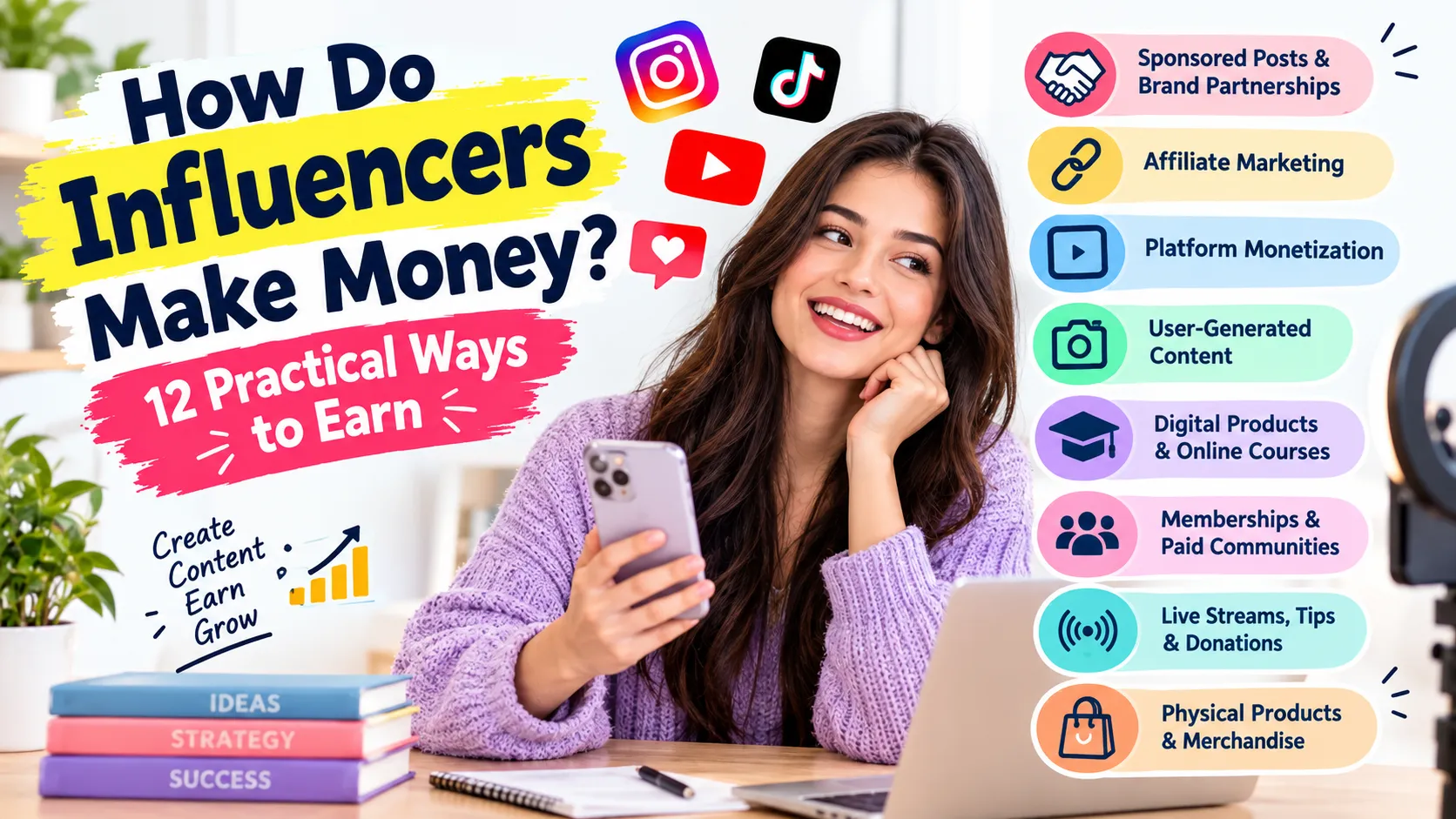
How Do Influencers Make Money? 12 Practical Ways to Earn
Social media has created opportunities for people to turn their creativity, knowledge, and online communities into income. Influencers can earn money by working with brands, recommending products, selling their own merchandise, and sharing valuable content with followers. However, earning money online usually requires consistent effort, audience trust, and a clear strategy.
If you are wondering how do influencers make money, the answer depends on their content, audience, platform, and business goals. Some creators earn through sponsored posts, while others build income from affiliate commissions, digital products, subscriptions, or professional services. Understanding these income streams can help beginners choose suitable opportunities and develop a more sustainable creator business.
What Is an Influencer?
An influencer is a content creator who builds an audience and influences what people discover, discuss, or consider buying. Influencers may focus on fashion, travel, technology, education, fitness, beauty, food, gaming, or other interests. Their audiences follow them for useful information, entertainment, personal experiences, or recommendations. How do influencers make money?
Influencers do not always need millions of followers to earn money. Smaller creators can attract brands when they reach a specific audience and generate meaningful engagement. For example, a gardening creator with a dedicated community may be valuable to a company selling seeds, tools, or plant supplies.
How Do Influencers Make Money?
There is no single method that works for every creator. Some income streams depend on brand relationships, while others require creators to sell products, provide services, or qualify for platform monetization programs. Learning how do influencers make money starts with understanding which methods match their audience and content.
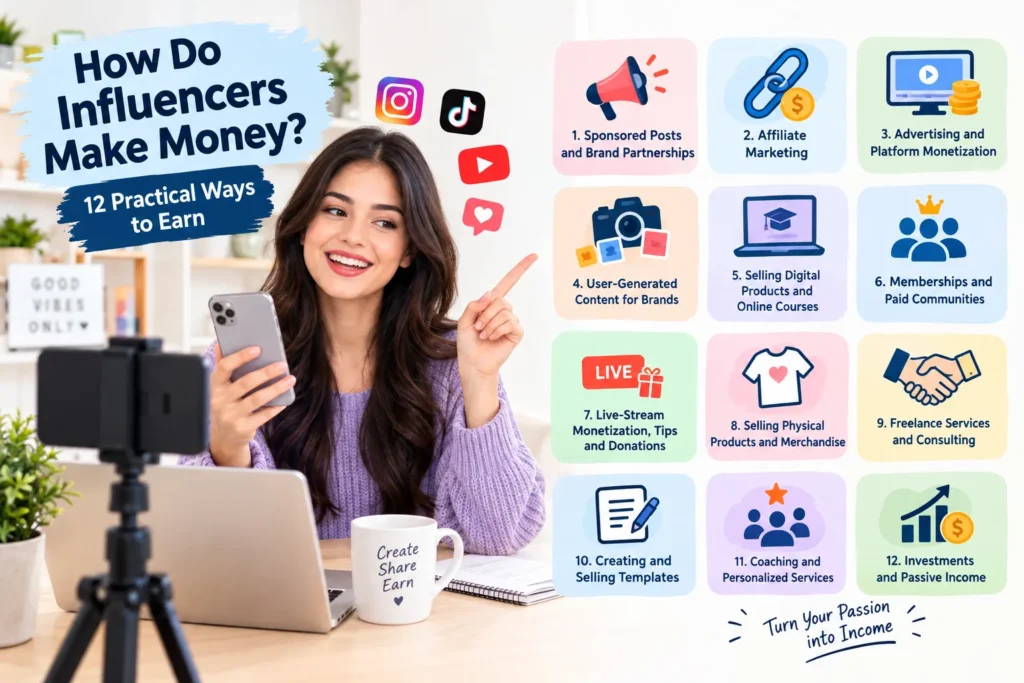
Many successful creators combine several income sources instead of relying entirely on one brand or social media platform. This approach can help them manage changing campaign budgets, platform policies, and audience interests. The following methods explain common ways influencers generate income.
Sponsored Posts and Brand Partnerships
Sponsored posts allow influencers to earn money by promoting a company’s product or service through social media posts, videos, stories, or livestreams. Payment depends on audience size, engagement, content quality, and campaign requirements. Long-term brand partnerships may provide regular opportunities, but influencers should agree on deadlines, deliverables, payment terms, and required disclosures before starting a campaign.
Affiliate Marketing
Affiliate marketing allows influencers to earn commissions when followers purchase products through their special links or referral codes. Creators can recommend relevant items such as clothing, books, software, or beauty products through tutorials and honest reviews. Earnings depend on qualifying purchases and program rules, so influencers should choose products they understand and clearly explain when a recommendation may generate a commission.
Advertising and Platform Monetization
Some social media platforms allow eligible creators to earn through advertising revenue, creator rewards, or other monetization programs. However, availability depends on the platform, country, account status, and current eligibility rules. Views do not guarantee a specific income, so influencers should check official platform requirements and understand how audience location, content format, and eligible viewing activity can affect earnings.
User-Generated Content for Brands
User-generated content (UGC) is another way to understand how do influencers make money through videos, photos, testimonials, and product demonstrations for businesses. Creators can earn money by producing content without having a large following. Beginners can create sample projects to attract clients and should agree on payment, deadlines, revisions, and content usage rights before starting work.
Selling Digital Products and Online Courses
How do influencers make money by selling digital products such as ebooks, templates, downloadable planners, photography presets, and online courses? For example, a fitness creator might offer a beginner workout guide, while a photographer could sell editing presets. Successful products should solve a genuine audience problem and provide clear value, while creators should consider production costs, marketing, customer support, and payment processing.
Memberships and Paid Communities
Memberships provide recurring income when followers pay for exclusive content, private groups, bonus videos, educational materials, or members-only livestreams. This approach works best when an audience consistently values the creator’s knowledge or entertainment. How do influencers make money? Influencers should explain membership benefits clearly, deliver content regularly, and establish transparent cancellation terms to maintain trust and encourage long-term participation.
Live-Stream Monetization, Tips, and Donations
Livestreaming allows influencers to interact with followers in real time and potentially earn through virtual gifts, viewer tips, donations, or platform payment features. Gaming, music, cooking, education, and question-and-answer sessions can encourage audience participation. However, earnings are not guaranteed, so creators should check platform eligibility, transaction fees, withdrawal requirements, and payment rules before relying on livestream income.
Selling Physical Products and Merchandise
Influencers can earn money by selling physical products such as clothing, accessories, artwork, beauty items, and branded merchandise. Understanding how do influencers make money can help creators choose products that match their content and audience interests. Before launching, they should research customer demand, production costs, shipping, returns, and service requirements because sales revenue does not represent profit after expenses.
Content Licensing and Stock Media
Creators may earn money by licensing original photographs, videos, illustrations, or other media to businesses, publishers, and customers. A license explains how the content can be used, including any limits on duration, location, distribution, or exclusivity. Influencers should confirm payment and usage rights in writing and ensure they have the necessary permissions for identifiable people, copyrighted material, and other protected content.
Coaching, Consulting, and Freelance Services
Influencers with professional skills can earn through coaching, consulting, or freelance services such as writing, photography, video editing, social media management, and business guidance. These services allow creators to earn from their expertise rather than depending entirely on audience size. They should demonstrate relevant skills, set clear prices, define project requirements, and avoid offering services or promising results beyond their qualifications.
Workshops, Speaking Engagements, and Paid Events
Influencers with specialist knowledge or public recognition may earn through workshops, webinars, speaking engagements, and paid appearances. These opportunities allow creators to teach skills, share professional experience, or participate in industry discussions. Beginners can start with small online sessions or community events, making sure they confirm fees, preparation requirements, travel arrangements, and cancellation conditions beforehand.
Combining Multiple Income Streams
Understanding how do influencers make money also means recognizing that creators can combine different income sources to reduce dependence on a single method. For example, a technology influencer might earn through affiliate marketing, sponsored reviews, and paid tutorials. Starting with one or two suitable options helps creators manage their time, maintain content quality, and expand gradually as they learn what their audience values.
How Much Do Influencers Make?
How do influencers make money vary widely, so there is no universal monthly salary. Some beginners earn nothing at first, while experienced creators may earn income from sponsorships, product sales, affiliate commissions, and services. Their results depend on audience engagement, niche, location, campaign budgets, publishing consistency, and business expenses.
When researching how influencers make money, it is important to distinguish revenue from profit. A creator might receive substantial payments but also spend money on equipment, editing, software, production, shipping, and contractors. Tracking income and expenses provides a clearer picture of how much money the business actually keeps.
What Factors Affect Influencer Earnings?
Several factors influence earning potential. Follower count may help brands estimate reach, but it does not tell the whole story. A smaller audience with strong engagement and a clear interest in a product may be more relevant to a campaign than a much larger audience with little interaction.
Important factors include:
Creators should review these factors regularly instead of focusing only on follower growth.
How to Become an Influencer and Start Earning
Beginners can start by choosing a subject they understand and enjoy discussing. They should identify the audience they want to help, publish useful content consistently, and learn which formats perform well. Early progress may be slow, so the first goal should be developing content skills and building trust rather than expecting immediate payments.
Once a creator has a portfolio and a clearer understanding of their audience, they can explore suitable earning opportunities. A practical starting plan includes:
This gradual process helps beginners build experience before investing heavily in equipment or advertising.
Legal and Ethical Considerations for Influencers
Trust is essential when learning how do influencers make money and building long-term success. Influencers should describe products honestly, avoid unsupported claims, respect copyright, and clearly disclose paid partnerships when required. They should also explain relevant financial relationships with brands. Since disclosure requirements vary by country, creators should check the rules that apply to their location and audience.
Creators should also review contracts before agreeing to sponsorships. Important terms include payment schedules, content ownership, exclusivity, revision limits, and the brand’s right to reuse content. Clear agreements help prevent disputes and establish professional expectations.
Taxes and Financial Responsibilities for Influencers
Influencer income may create tax and recordkeeping responsibilities, depending on where the creator lives and operates. Creators should keep records of payments, business expenses, contracts, and relevant receipts. They should also understand how cash payments, free products, commissions, and other benefits are treated under their local rules.
Income from part-time work or online activities may also be subject to reporting requirements, depending on local tax laws. Influencers should consult their relevant tax authority or a qualified professional to understand their responsibilities and manage their earnings appropriately.
Conclusion
Influencer income comes from combining creativity with a clear understanding of audience needs and business opportunities. Sponsored partnerships, affiliate marketing, digital products, platform monetization, and professional services each offer different advantages and responsibilities. The right choice depends on a creator’s strengths, resources, and goals.
Understanding How Do Influencers Make Money is a useful first step, but sustainable progress requires patience, honest communication, and consistent improvement. Start with a manageable strategy, measure what works, and build additional income sources as your experience grows. A trustworthy audience and a realistic business plan can provide a stronger foundation than chasing quick earnings.