Short-Term Goals Examples: 50 Ideas for Work and Life
Setting goals is a good way to give your daily life a clear direction. Whether you want to improve your health, manage your money, learn new skills, or grow in your job, small and realistic targets can help you move forward step by step.
These short-term goals examples will help you find simple goals you can start today. You will learn how to set goals you can reach, check your progress, and build habits that help your personal and work life.
What Are Short-Term Goals Examples?
Short-term goals examples are clear things you plan to finish in a short time, such as a few days, weeks, or months. They focus on small actions and clear results, not on big dreams that may take years.
For example, saving $100 in one month, finishing an online course in four weeks, or walking for 20 minutes every day are short-term goals. The time needed depends on your situation, your resources, and how hard the task is.
Why Are Short-Term Goals Important?
Short-term goals turn big dreams into small, useful steps. Instead of feeling stressed by a big goal, you can focus on what to do next and see your progress as you go.
What Makes a Good Short-Term Goal?
Good short-term goals examples should be clear, realistic, easy to measure, and useful for your needs. A vague wish like “be healthier” is hard to measure because it has no clear action or target.
A better goal has an action and a deadline. For example, “I will walk for 20 minutes after dinner, five days a week, for the next month” gives you a simple routine that you can follow and check.
How to Use the SMART Goal-Setting Method
The SMART method helps you set short-term goals that are Specific, Measurable, Achievable, Relevant, and Time-bound. These five principles clarify your target and make it easier to track progress within a realistic deadline.
For example, instead of saying, “I want to improve my English,” set a goal to learn five new words every day and practice speaking for 15 minutes, five days a week, for four weeks. This gives you a clear plan with actions you can measure.
Good vs. Weak Short-Term Goals Examples
Weak goals usually have no details, no deadline, or no way to measure the result. A goal like “save more money” does not say how much you want to save or by when.
A better version is, “I will save $50 from my next two paychecks.” The target is clear, the amount can be measured, and the deadline gives you a reason to check your progress.
| Weak goal | Better short-term goal |
| Get fit | Walk for 20 minutes five days a week |
| Learn something new | Finish one beginner lesson each day for two weeks |
| Save money | Save $50 by the end of the month |
| Improve productivity | Plan the next day’s three main tasks each evening |
| Read more | Read 10 pages every day for 30 days |
50 Short-Term Goals Examples for Work and Life
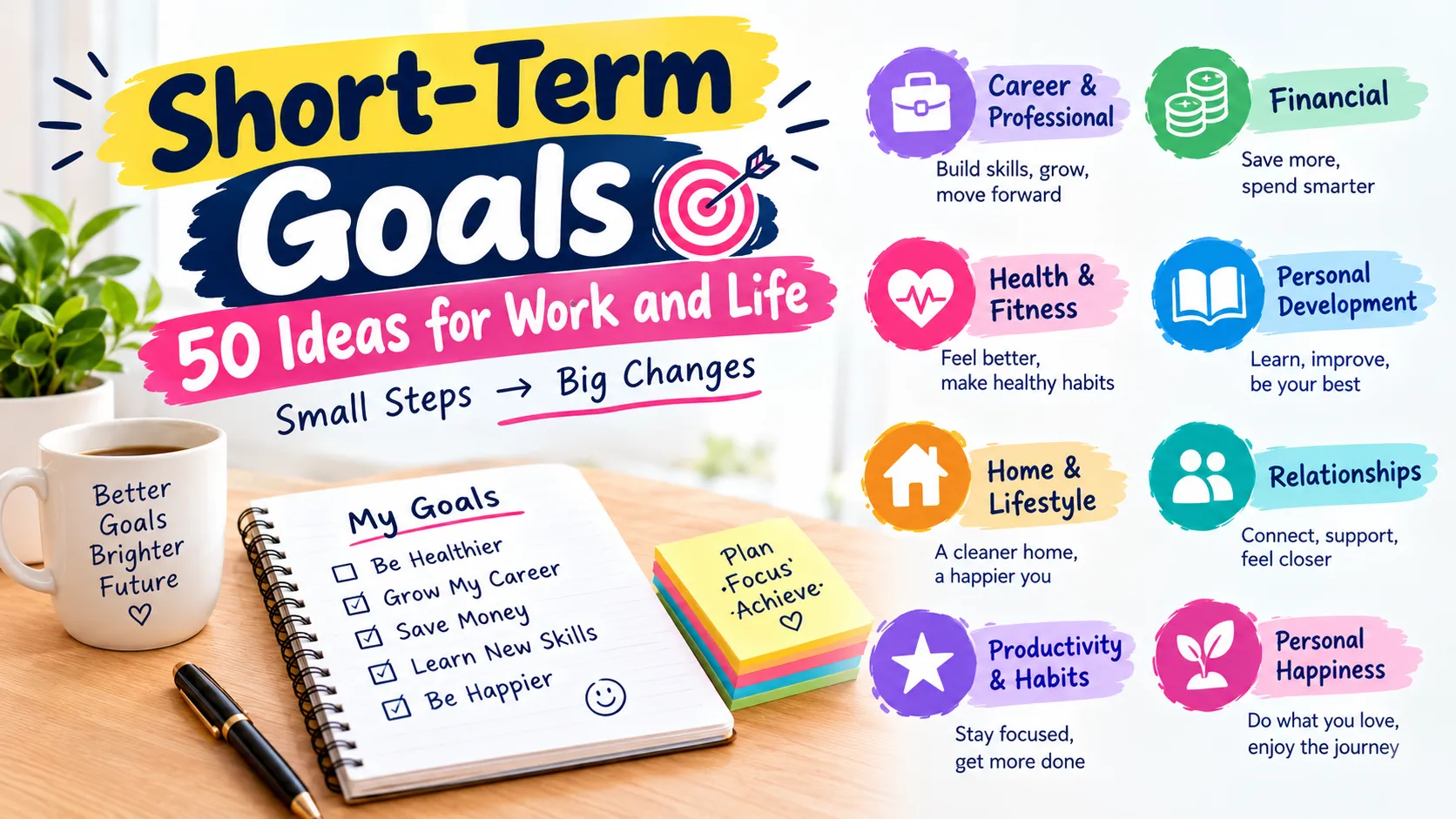
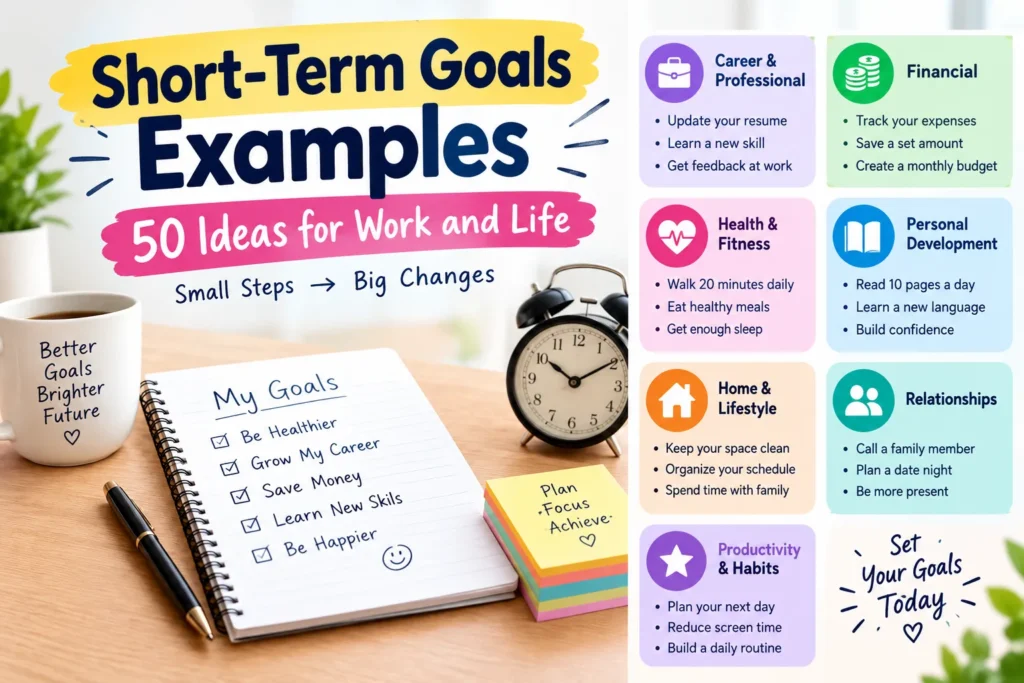
The short-term goals examples below cover eight important parts of everyday life. Pick the ones that match your needs, your free time, and your situation. Do not try to do all 50 at once.
You can change each example to fit your schedule and resources. If a goal feels too hard, do less work or give yourself more time until it feels realistic and easy to manage.
Short-Term Career and Professional Goals
Career goals help you build useful work skills, do better at your job, and get ready for new chances. You can focus on communication, organizing your work, meeting people in your field, or learning skills that help in your current job.
Start with one change that could make your daily work easier or better. Check the results after a few weeks, then decide if you need another goal or a different method.
Short-Term Financial Goals
Short-term goals examples can help you track spending, prepare for upcoming expenses, and build better saving habits. Start with a realistic amount and a plan that fits your budget.
Begin by looking at your recent expenses and finding one area where you can make a small change. Write down your spending for a month to see if your plan is working.
- Write down every expense for 30 days.
- Save a realistic amount from your next paycheck.
- Check and cancel one extra subscription.
- Make a monthly budget this week.
- Compare prices before your next big purchase.
- Keep some money aside for an upcoming bill.
Short-Term Health and Fitness Goals
Health and fitness goals work best when they focus on regular habits, not extreme changes. Small actions like moving daily, sleeping at a fixed time, or cooking healthy meals can easily fit into your routine.
Choose goals that match your health, your abilities, and your situation. Increase activity slowly, and ask a doctor or expert if you have health problems or need a plan made for you.
Short-Term Personal Development Goals
Personal development goals help you improve your knowledge, habits, and daily skills. They might include reading, learning a language, building confidence, or practicing a skill that matters to you.
Choose a goal that interests you enough to keep going. Giving a small amount of time every day is often easier than waiting for a free afternoon that may never come.
Short-Term Relationship Goals
Relationship goals help you give more time to talking, trust, and close connections. They can focus on spending good time with family, listening carefully, or getting back in touch with someone you have not spoken to for a while.
Short-Term Education and Learning Goals
Education-related Short-Term Goals: Examples help students and workers increase their knowledge. Clear study targets make it easier to prepare for exams, finish assignments, and understand lessons on time.
Break big study tasks into smaller sessions and give each session a clear purpose. For example, you might revise one chapter, solve practice questions, or write a short summary of a lesson before moving to the next topic.
Short-Term Home and Organization Goals
Organization-related Short-Term Goals: Examples help you reduce mess, get ready for busy days, and keep your space in order. Start with one drawer, one work area, or one routine, not your whole home at once.
A short, planned task is easier to repeat than a big cleaning job that takes hours. Choose one area to improve and decide when you will do the work.
Short-Term Mental Wellness Goals
Mental wellness goals can help you find time for rest, thinking, and activities you enjoy. They should support your well-being, not become another source of stress or a reason to blame yourself.
Pick a simple habit that suits you, such as writing in a journal, taking a quiet break, or spending time outside. If emotional problems continue or get in the way of daily life, think about talking to a qualified health professional.
How to Set and Achieve Short-Term Goals
Choosing a goal is only the first step. You also need a simple plan that says what you will do, when you will do it, and how you will know if you are making progress.
Start with one or two main goals and build your routine around them. When the actions feel easy, you can add another goal without making your schedule too heavy.
50 Short-Term Goals Examples for Work and Life
Break Big Goals Into Small Steps
Divide large goals into smaller tasks to make them easier to manage. Set weekly targets and allow extra time for revision or unexpected delays.
Set Deadlines and Plan Your Tasks
Set deadlines and schedule tasks in your calendar to stay organized. Choose suitable times and adjust your plan when needed.
Track Progress and Check Results
Track completed tasks using a notebook, spreadsheet, or habit app. Review your progress regularly to see what is working.
Use Feedback and Change Your Plan
Adjust your plan when your priorities, time, or resources change. Learn from challenges and keep working toward your goal.
How Short-Term Goals Support Long-Term Success
Short-term goals examples can give you useful steps toward bigger dreams. For example, someone who wants a successful career might start by improving one skill, finishing a useful course, and updating a resume before applying for good jobs.
The link becomes clearer when each small goal supports a specific long-term direction. However, not every short-term goal needs to serve a big dream. Some goals are worth it simply because they make your daily life, relationships, or well-being better.
Common Goal-Setting Mistakes to Avoid
One common mistake with short-term goals is setting too many goals at once. Focus on one or two main goals first, so your attention is not split, and progress stays easy.
Another mistake is choosing deadlines that are not realistic or judging success only by the final result. Focus on actions you can control, keep room for unexpected problems, and review your plan instead of quitting after one setback.
How to Stay Motivated When Facing Setbacks
Motivation goes up and down, so it helps to build routines that do not depend on feeling excited every day. Get ready for common problems by choosing smaller tasks, setting reminders, and deciding in advance what you will do on a busy day.
Conclusion
The best short-term goals examples are realistic, easy to measure, and linked to your real needs. Whether you want to grow in your career, manage money, build healthier habits, strengthen relationships, or learn something new, start with a clear goal and a deadline you can manage.
Choose one or two goals, break them into small actions, and check your progress often. Steady effort and smart changes can help you get quick results while building habits that support your future dreams.