
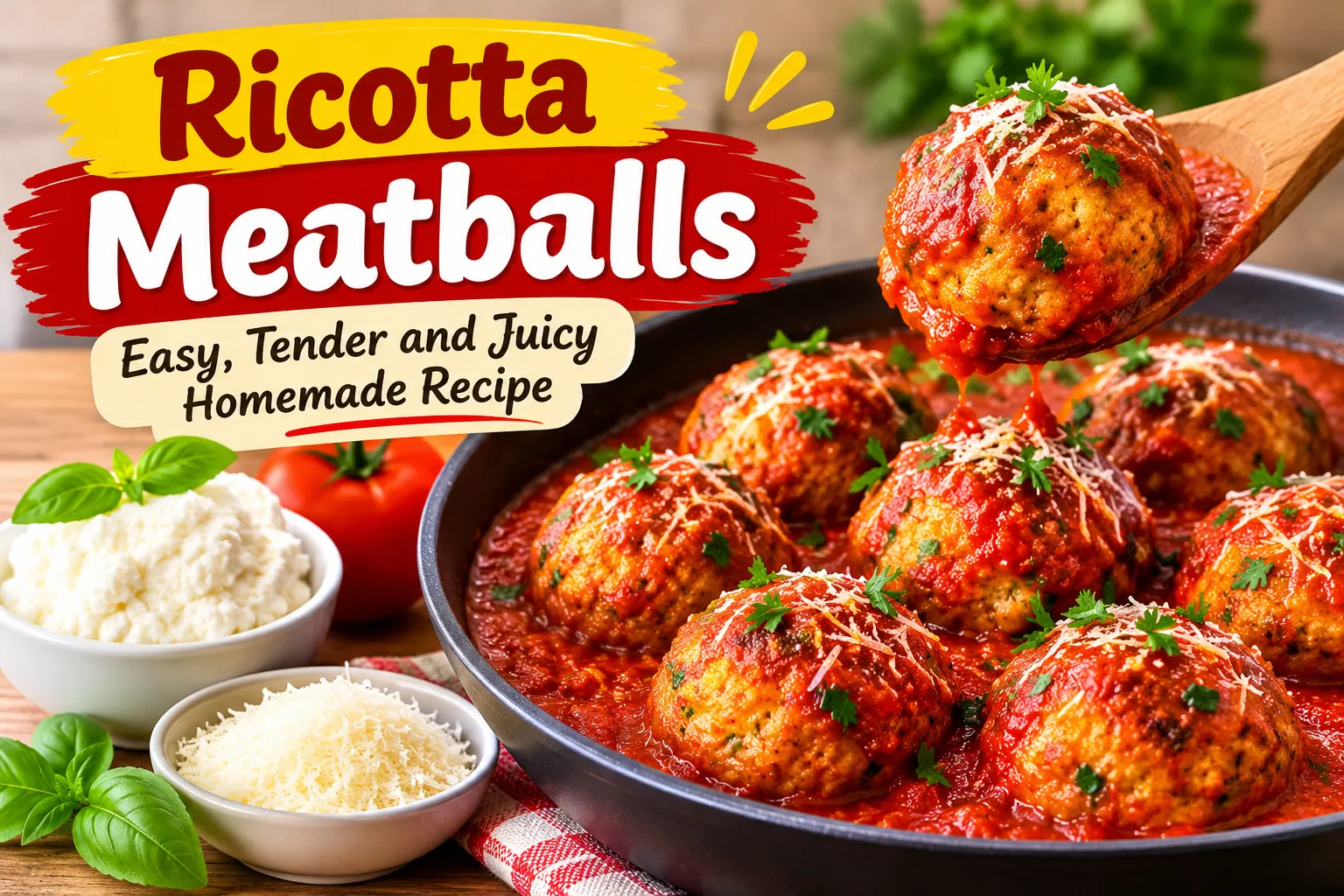
Ricotta Meatballs: Easy, Tender and Juicy Homemade Recipe
If you have ever bitten into a meatball that felt dry and heavy, you know how disappointing it can be. Ricotta meatballs fix that problem in the simplest way. One creamy ingredient changes the whole texture.
This recipe is made for busy home cooks. You do not need fancy tools or hard techniques. With basic pantry items and about 40 minutes, you can serve soft, juicy meatballs that taste like a family restaurant dinner.
What Are Ricotta Meatballs?
Ricotta meatballs are classic Italian-style meatballs with ricotta cheese mixed right into the meat. Ricotta is a soft, mild, slightly sweet cheese. Inside the mixture, it melts and spreads moisture evenly, so every bite stays soft and rich.
Traditional meatballs usually depend on milk-soaked bread, eggs, and fat for tenderness. They can still turn out firm or dry if cooked too long. Ricotta adds both moisture and gentle richness, so the meatballs feel lighter, fluffier, and much more forgiving.
Ingredients for Easy Ricotta Meatballs
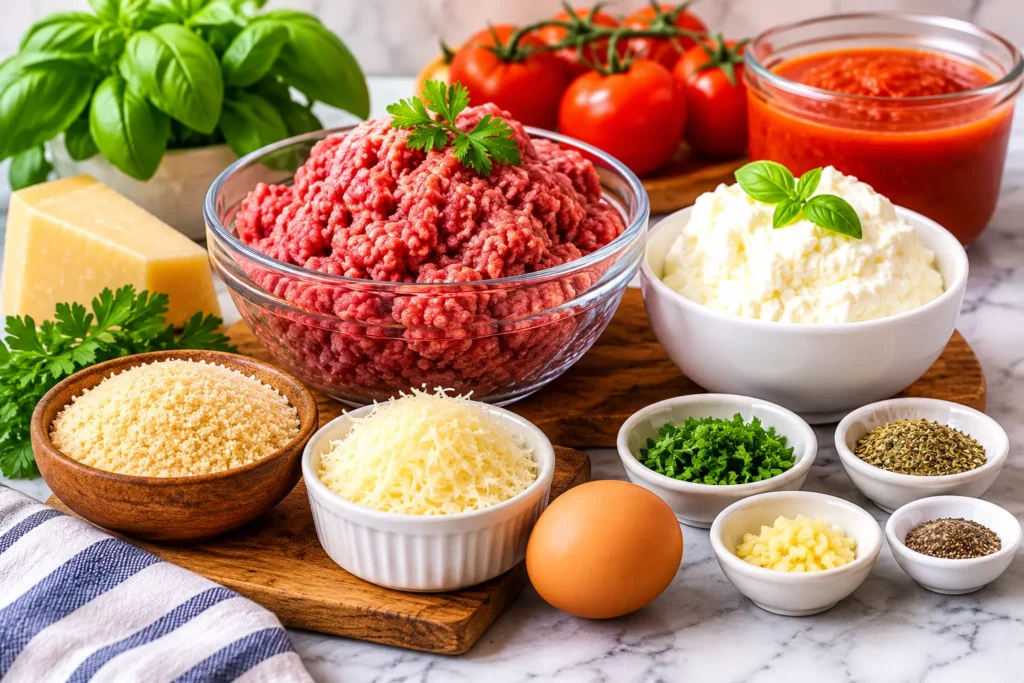
You only need a handful of simple ingredients for this recipe. Most of them are probably in your kitchen already. Each one has a clear job, from building flavor to keeping the meatballs soft and well held together.
Quality matters more than quantity here. Fresh cheese, good tomato sauce, and real herbs make a noticeable difference. Below is a quick look at each ingredient and why it belongs in the bowl.
Ground Beef or Turkey
Ground beef is the classic choice because it brings deep flavor and natural fat. Aim for 80/20 beef if you want extra juicy meatballs. Very lean beef tends to turn dry, even with ricotta helping out.
Ground turkey works well too and gives a lighter result. Since turkey is leaner, choose dark meat or a 93% lean blend. You can also mix half beef and half turkey for a balanced taste and texture.
Whole Milk Ricotta Cheese
Whole milk ricotta is the secret ingredient that makes these meatballs so tender. Its high moisture and fat content keep the meat soft while cooking. About one cup is enough for one pound of meat.
Skip the low-fat version if you can. It is often watery and can make the mixture too loose. If your ricotta looks very wet, drain it in a fine strainer for ten minutes before using.
Parmesan Cheese and Breadcrumbs
Freshly grated Parmesan adds a salty, nutty depth that plain ricotta cannot give on its own. A little goes a long way. Grate it finely so it blends smoothly into the meat without leaving hard bits.
Breadcrumbs soak up extra moisture and help the meatballs hold their shape. Plain or Italian-seasoned crumbs both work well. Use about half a cup, and avoid adding more, or the meatballs may turn dense.
Garlic, Herbs and Seasonings
Fresh garlic gives the meatballs a warm, savory base. Two or three minced cloves are plenty. Add chopped parsley and a pinch of dried oregano or basil for that familiar Italian flavor.
Do not forget salt and black pepper. Ricotta is mild, so the meat needs proper seasoning to taste full. A pinch of red pepper flakes is optional if you like a little gentle heat.
Marinara or Tomato Sauce
A good tomato sauce turns simple meatballs into a complete meal. Store-bought marinara saves time, and homemade sauce adds extra freshness. Either way, choose one with a bright, balanced flavor, not an overly sweet one.
You will need about three cups of sauce for one batch. The meatballs finish cooking gently in the sauce, soaking up flavor as they simmer. This also keeps them soft and juicy until serving.
How to Make Homemade Ricotta Meatballs
Making ricotta meatballs from scratch is easier than most people expect. The process has four short stages: mixing, shaping, browning, and simmering. Each stage takes only a few minutes of active work.
The key is a gentle touch. Rough handling makes meatballs tough, no matter how good the ingredients are. Follow the steps below, and you will get soft, golden meatballs every time.
Prepare the Ricotta Meatball Mixture
Add the ground meat, ricotta, Parmesan, breadcrumbs, garlic, herbs, salt, pepper, and one egg to a large bowl. Use your hands to mix everything together. Stop as soon as the ingredients look evenly combined.
Overmixing is the most common mistake, because it squeezes the meat and makes it firm. The mixture should feel soft and slightly sticky. If it feels too wet, add one extra tablespoon of breadcrumbs.
Shape the Meatballs
Lightly dampen your hands with water or rub them with a little olive oil. This stops the mixture from sticking to your fingers. Scoop out about two tablespoons of mixture for each meatball.
Roll gently between your palms until the meatball looks round and smooth. Do not press too hard. Place each one on a tray as you go. This recipe makes around 20 medium meatballs.
Cook the Meatballs Until Golden
Heat two tablespoons of olive oil in a wide skillet over medium heat. Place the meatballs in the pan with some space between them. Cook for about two to three minutes on each side.
You are not cooking them fully here. You just want a golden crust that adds flavor. Turn them carefully with tongs or a spoon, since ricotta meatballs are soft and can break if handled roughly.
Simmer in Marinara Sauce
Pour your marinara into the pan, or move the browned meatballs into a pot of warm sauce. Bring it to a light simmer, then reduce the heat to low. Cover and cook for 15 to 20 minutes.
The meatballs are ready when the center is no longer pink. Beef should reach 160°F (71°C), and turkey should reach 165°F (74°C). Finish with fresh basil and a little extra Parmesan on top.
How to Make Oven-Baked Ricotta Meatballs
If you want a less messy method, baking is a great choice. There is no splattering oil and no standing at the stove. It is especially helpful when you are making a big batch for guests or meal prep.
Preheat the oven to 400°F (200°C) and line a baking sheet with parchment paper. Arrange the meatballs with a little space between them. Bake for 18 to 22 minutes, then add them to warm sauce for a few minutes.
Italian-Style Ricotta Meatballs with Tomato Sauce
For a more traditional Italian feel, build a simple sauce in the same pan. Sauté chopped onion and garlic in olive oil until soft. Add crushed tomatoes, a pinch of salt, and a splash of water to loosen the sauce.
Let the sauce bubble gently for ten minutes, then add the browned meatballs. A bay leaf or a small pinch of sugar can balance the acidity of the tomatoes. Simmer until the sauce thickens and clings to the meatballs.
Tips for Making Tender and Juicy Ricotta Meatballs
Small habits make a big difference in meatball texture. Use whole milk ricotta, avoid lean meat that is too dry, and mix only until combined. These three choices alone protect the soft, juicy bite you are aiming for.
Chilling the mixture for 20 to 30 minutes also helps. It firms up the cheese and makes shaping easier. Also, avoid packing the meatballs tightly. Loosely rolled meatballs stay lighter, while tightly packed ones turn dense.
What to Serve with Ricotta Meatballs
Ricotta meatballs are very flexible, so you can build a meal around them in many ways. They suit a cozy family dinner as well as a weekend gathering. The saucy, cheesy flavor pairs well with simple sides.
Choose sides that soak up sauce or add a fresh contrast. Soft, starchy foods and crisp vegetables both work nicely. Here are three easy ideas that need very little extra effort.
Serve with Pasta
Spaghetti and meatballs is the all-time favorite pairing. Cook the pasta until just tender, toss it with a spoonful of sauce, and place the meatballs on top. Every forkful tastes comforting and familiar.
Other pasta shapes work well too. Try rigatoni, penne, or fettuccine if you want something different. Thick shapes hold the sauce well, so each bite stays flavorful and satisfying from start to finish.
Pair with Garlic Bread
Warm garlic bread is perfect for mopping up extra tomato sauce. Spread softened butter mixed with minced garlic and parsley over sliced bread. Bake until the edges turn golden and crisp.
You can also turn the meatballs into sandwiches. Tuck a few into a toasted roll, spoon on sauce, and top with mozzarella. Melt it under the broiler for a quick, hearty meatball sub.
Serve with Fresh Salad
A crisp green salad balances the richness of the cheese and meat. Mix arugula, cucumber, and cherry tomatoes with olive oil and lemon juice. The light, tangy dressing cuts through the heavier flavors.
If you prefer something warmer, try roasted vegetables like zucchini, broccoli, or bell peppers. They add color and nutrition to the plate. This also makes the meal feel complete without being too heavy.
How to Store and Reheat Ricotta Meatballs
These meatballs store very well, which makes them ideal for meal planning. You can cook a big batch once and enjoy it for several days. Proper storage keeps the flavor fresh and the texture soft.
Always let the meatballs cool before packing them away. Putting hot food straight into a sealed container traps steam and makes them soggy. A short cooling time of 20 to 30 minutes is enough.
Refrigerating Leftover Meatballs
Place the cooled meatballs in an airtight container, preferably with some of the sauce. The sauce acts as a protective layer and keeps them moist. Store them in the fridge for up to three or four days.
If you have stored them without sauce, separate the layers with parchment paper. This prevents sticking and keeps their shape. Always use clean utensils when taking them out to keep the container fresh.
Freezing Homemade Ricotta Meatballs
Freezing is a smart way to save extra meatballs. Spread cooked, cooled meatballs on a tray and freeze them for about an hour. Then move them to a freezer bag so they do not clump together.
They keep well for up to three months. For the best quality, remove as much air as possible from the bag and label it with the date. You can also freeze them in sauce for even easier reheating.
Reheating Without Drying Them Out
The gentlest way to reheat is on the stove. Place the meatballs in a pan with a splash of sauce or water, cover, and warm them over low heat for about 10 minutes. Frozen ones should thaw overnight in the fridge first.
You can also use the microwave. Cover the dish loosely, add a spoonful of sauce, and heat in short bursts of 30 seconds. Check the center to make sure it is hot all the way through before serving.
Conclusion
Ricotta meatballs prove that a small change can make a big difference. Adding one creamy ingredient gives you meatballs that stay soft, juicy, and full of flavor. The recipe is simple, the steps are easy, and the results taste like a proper Italian family dinner.
Whether you pan-fry them, bake them, or simmer them in sauce, they turn out well almost every time. They also store and freeze nicely, so you can enjoy them throughout the week. Try this recipe once, and it may become a regular favorite at your table.