GenBoostermark Software: What You Need to Know
If you’ve spent any time researching marketing automation tools in 2026, chances are you’ve come across the name GenBoostermark. It’s showing up in comparison threads, marketing forums, and “best tools” roundups with growing frequency, and for good reason: businesses are under constant pressure to do more with fewer people, fewer logins, and fewer hours in the day. GenBooster has positioned itself as an answer to that pressure, a platform built around the idea that marketing software shouldn’t require a dozen browser tabs and a training manual to use.
Another important aspect of modern marketing software is how it helps businesses manage their daily tasks more efficiently. From organizing campaigns to tracking performance, the right platform can simplify complex processes and help teams stay focused on their goals. As companies continue to explore smarter digital solutions, understanding the features, benefits, and practical uses of different tools becomes essential before choosing one for long-term growth.
What Is GenBoostermark Software?
At a high level, GenBoostermark is described as a marketing automation and business optimization platform, the kind of tool meant to sit at the center of a team’s day-to-day operations rather than off to the side. Instead of stitching together separate apps for analytics, campaign management, lead tracking, and reporting, the idea is to bring those functions under one roof.
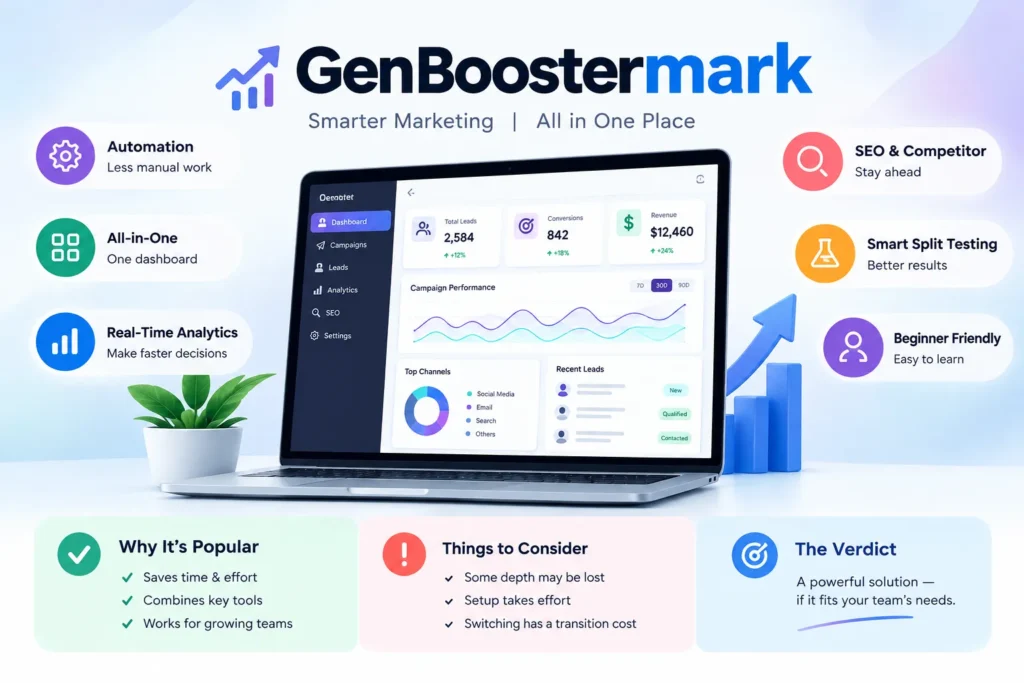
That “single dashboard” philosophy is one of the more consistent themes you’ll find whenever the platform comes up in discussion: the promise of fewer logins, less context-switching, and one place to see how a campaign is actually performing.
The Problem GenBooster was Built to Solve
Most marketing teams don’t struggle because they lack tools; they struggle because they have too many of them. A typical stack might include a CRM, an email platform, an analytics suite, a social scheduler, and a spreadsheet holding it all together. Every new tool adds a login, a learning curve, and one more place data can fall out of sync.
GenBooster mark’s pitch centers on that exact pain point: consolidation. Rather than asking teams to become experts in five different systems, the goal is to reduce the number of moving parts so people can spend more time on strategy and less time on maintenance.
What the Platform Actually Does
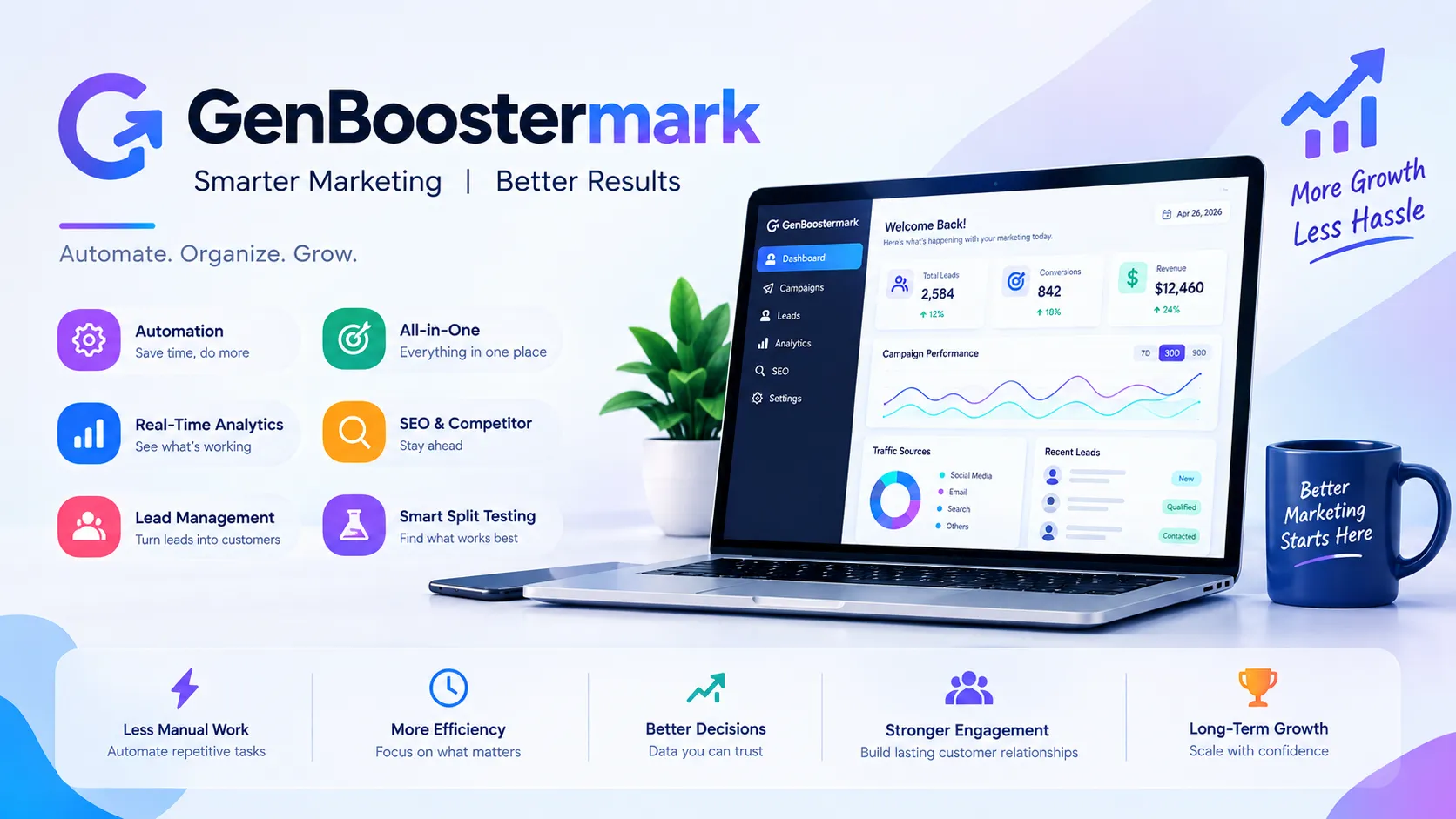
Broadly, GenBoostermark is positioned around a few core jobs: tracking campaign performance, automating repetitive marketing tasks, organizing leads, and surfacing insights that would otherwise require manually cross-referencing several reports.
The emphasis across most discussions of the platform is on reducing manual work by automating the follow-ups, reminders, and reporting tasks that quietly eat up a marketer’s week while keeping the interface approachable enough that new users aren’t stuck watching tutorial videos for days before they can do anything useful.
Businesses often struggle to manage repetitive tasks and maintain an efficient workflow, which can take time away from important marketing activities. The right digital tools can help solve this problem by simplifying routine processes and keeping daily operations organized.
Exploring solutions such as New Software RCSDASSK can also provide readers with a starting point for learning about software tools and their practical applications. By reducing unnecessary manual work, teams can spend more time planning effective campaigns, improving customer engagement, and achieving better results.
Why GenBoostermark Software Is So Popular in 2026
Automation That Replaces Manual Triggers
A lot of marketing work is repetitive by nature: send this email after that action, flag this lead after that behavior, generate this report every Monday. Platforms that can absorb that repetitive layer tend to earn loyalty quickly, simply because the alternative of doing it by hand, every time, gets old fast. GenBoostermark’s appeal leans heavily on this shift from manual triggers to automated ones.
A Single Dashboard Instead of Five Logins
Consolidation is a recurring theme in why people gravitate toward platforms like this. When performance data, lead activity, and campaign status live in one dashboard instead of five disconnected tools, teams spend less time reconciling numbers and more time acting on them.
Beginner-Friendly Without Being Feature-Poor
Tools that are easy to learn often achieve that by cutting features, and tools with real depth often achieve that by piling on complexity. The sweet spot platforms aim for, GenBooster included, is staying approachable for newer users while still giving experienced marketers enough depth to do serious work.
Real-Time and Predictive Analytics
Waiting days for a report to catch up with reality is a real friction point for fast-moving campaigns. Real-time visibility into engagement, conversions, and drop-off points lets teams adjust course while a campaign is still live, rather than after the fact.
Built-In SEO and Competitor Analysis
Bundling basic SEO and competitive visibility into the same platform teams already use for campaign management removes another reason to keep a separate tool open and keeps strategic decisions closer to the data that informs them.
Smart Split Testing Without Manual Setup
Split testing is valuable, but manually configuring variants, traffic splits, and result tracking is tedious enough that many teams skip it entirely. Automating that setup lowers the barrier to actually testing ideas instead of guessing.
GenBoostermark can help marketers simplify split testing by making it easier to compare campaign variations and track results. This allows teams to identify effective strategies, reduce manual work, and make more informed decisions based on performance data.
Who Gets the Most Value and Who Should Skip It
Best Fit: Teams That Match These Conditions
Platforms like this tend to pay off fastest for teams that are already running multiple campaigns across multiple channels, that are currently juggling several disconnected tools, and that have someone willing to actually configure the automations rather than leaving them on default settings. Growing teams that have outgrown spreadsheets but aren’t ready for a heavyweight enterprise suite are often the sweet spot.
Poor Fit: When to Look Elsewhere
On the other end, a solo creator running one or two simple campaigns a month may find an all-in-one platform like this to be more infrastructure than they actually need. The same goes for teams that already have a deeply customized stack they’re happy with; ripping that out to consolidate rarely makes sense unless the current setup is genuinely causing pain.
The Setup Discipline Trap
The most common way any automation platform underdelivers isn’t a flaw in the software; it’s a flaw in the setup. Automations that are never fully configured, dashboards nobody customizes, and reports nobody reads will make any tool feel disappointing. Getting real value tends to require an upfront investment of time to set things up properly, not just signing up and hoping the defaults do the work.
Pros, Cons, and an Honest Verdict
Pros and Cons at a Glance
What tends to work in its favor:
What’s worth weighing carefully:
Verdict
If the transaction appears unauthorized or the merchant cannot resolve a genuine billing concern, contact your credit card issuer. Ask about its dispute procedure, required evidence, and applicable deadlines, and follow the issuer’s instructions rather than assuming that contacting the merchant automatically opens a card dispute. If you suspect card fraud, notify your issuer promptly and follow its recommendations for securing your account.
Conclusion
GenBoostermark represents a broader shift in how marketing teams want their tools to work: fewer logins, less manual busywork, and more decisions made from a single, real-time view of what’s actually happening.
Like any consolidation platform, its value shows up most clearly for teams drowning in disconnected tools and least clearly for teams with simple, already-working setups. As with most software decisions, the right move is matching the tool to the actual size and shape of the problem, not the other way around.