
Can Allergies Make You Cough? Causes, Symptoms, and Relief
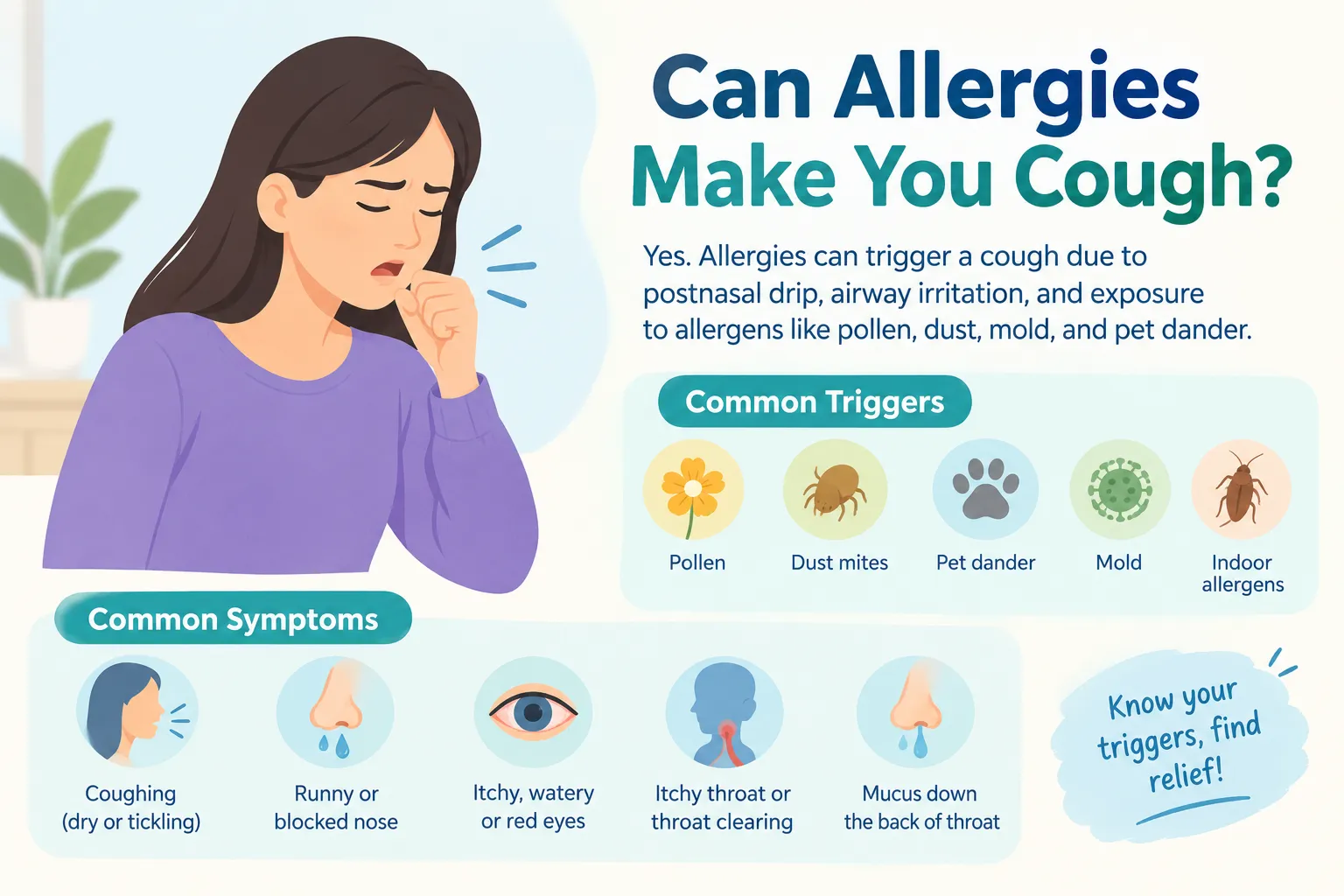
Can allergies make you cough? Yes, allergies can cause a persistent cough, especially when pollen, dust mites, mold, or pet dander irritate your nose and airways. An allergy-related cough may occur alongside sneezing, a runny nose, itchy eyes, or throat irritation. Some people notice that their cough becomes worse during particular seasons or after spending time in certain environments.
Although coughing is often associated with colds and flu, allergies can also be responsible. Understanding the cause is important because an allergy cough may require a different approach from a cough caused by an infection. This guide explains why allergies cause coughing, how to recognize common symptoms, which treatments may help, and when to seek medical advice.
What Is an Allergy Cough?
An allergy cough is coughing associated with an allergic reaction. When your immune system reacts to a substance it considers harmful, it can trigger inflammation and irritation in the nose, throat, or airways. These reactions may lead to coughing, particularly when mucus runs down the back of your throat, or your breathing passages become sensitive.
Can Allergies Make You Cough? An allergy-related cough is often dry, but its characteristics can vary depending on the underlying cause. For example, someone with seasonal allergies may experience coughing alongside nasal congestion, while another person may develop a cough because allergies aggravate asthma. Not every persistent cough is caused by allergies, so other possible explanations should be considered.
How Allergies Cause Coughing
Postnasal Drip
One common reason allergies cause coughing is postnasal drip. During an allergic reaction, the nose may produce extra mucus. This mucus can travel down the back of the throat, creating a tickling sensation that triggers repeated coughing or frequent throat clearing. If you wonder, Can Allergies Make You Cough, postnasal drip is one possible explanation.
Airway Irritation
Allergens can irritate sensitive airways and may trigger coughing in people with allergic asthma. The airways become inflamed and more reactive, making symptoms more likely after exposure to triggers such as pollen, dust, or pet dander.
Can Allergies Make You Cough? Cough related to asthma may occur at night, during exercise, or after exposure to cold air. Wheezing, chest tightness, and shortness of breath can also occur. These symptoms warrant medical evaluation because asthma requires appropriate treatment, not just cough relief.
Common Triggers of an Allergy Cough
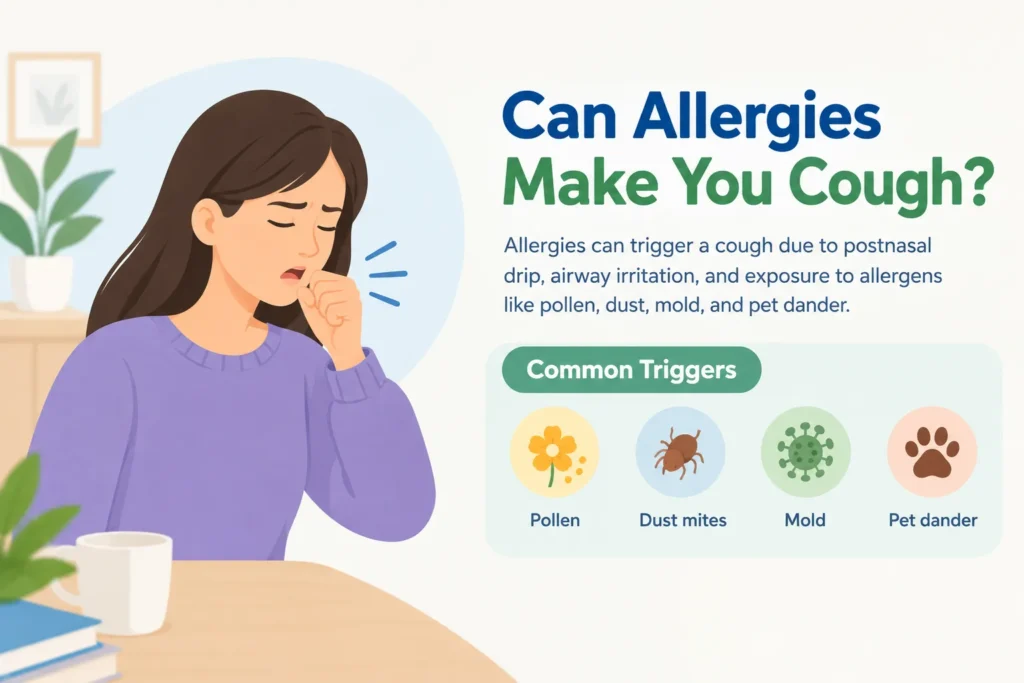
If you wonder, Can Allergies Make You Cough, identifying your allergy triggers can help you understand when and where coughing occurs. Some allergens, such as pollen, are more common during particular seasons, while others, including dust mites and pet dander, may be present throughout the year.
Common triggers include:
For example, if your cough becomes worse while cleaning a dusty room but improves after leaving it, an indoor trigger may be involved. Keeping track of your symptoms and surroundings can help you identify patterns. However, this observation alone cannot confirm an allergy.
Common Symptoms of an Allergy Cough
An allergy cough often appears with other symptoms affecting the nose, eyes, and throat. If you wonder, Can Allergies Make You Cough, recognizing these accompanying signs may help you understand how allergies trigger coughing and distinguish an allergic reaction from other common causes.
Possible symptoms include:
Some people experience symptoms for weeks or months when exposure continues. Others notice symptoms mainly during a specific allergy season. However, symptom patterns vary, and having these signs does not automatically mean that allergies are responsible.
Allergy Cough vs. Cold or Flu Cough
Can Allergies Make You Cough? Colds and flu can produce similar symptoms, including coughing and nasal congestion. However, some differences may help you understand what is happening. Allergies commonly cause itching and repeated sneezing, while viral infections may cause a sore throat, tiredness, or fever.
| Symptom | Allergy cough | Cold or flu cough |
| Itchy eyes or nose | Common with allergies | Less typical |
| Sneezing | Common | Can occur, especially with a cold |
| Fever | Not a typical allergy symptom | May occur, especially with flu |
| Body aches | Not typical | More common with flu |
| Symptom pattern | May return with allergen exposure | Often develops during an illness |
| Duration | May continue while exposure persists | Often improves as the infection resolves |
These differences are useful clues, not a definite diagnosis. A person can have allergies and a respiratory infection at the same time. If symptoms are severe, unusual, or persistent, consult a healthcare professional rather than relying on symptoms alone.
Other Possible Causes of a Persistent Cough
Not every cough associated with nasal symptoms is caused by allergies. If you’re wondering, Can Allergies Make You Cough, remember that asthma, acid reflux, respiratory infections, smoking, and certain medications can also contribute to persistent coughing. More than one condition may sometimes be involved, so identifying the underlying cause is important for choosing the right treatment.
Asthma may cause coughing with wheezing or breathing difficulties, although coughing can occasionally be its main symptom. Acid reflux can irritate the throat when stomach contents move upward into the esophagus. If allergy treatments do not help or the cough keeps returning, a healthcare professional can investigate other possible causes.
How to Diagnose an Allergy-Related Cough
If you wonder, Can Allergies Make You Cough, a healthcare professional can help identify the cause. They may ask when your cough started, how long it lasts, and whether particular environments or seasons make it worse. They may also ask about sneezing, nasal congestion, itchy eyes, breathing symptoms, medication use, and any history of allergies or asthma.
Depending on your symptoms, an evaluation may include a physical examination, allergy skin testing, or blood tests. If asthma is suspected, breathing tests may also be recommended. Testing is not necessary for every person, and the appropriate approach depends on your medical history. Accurate diagnosis helps guide treatment toward the underlying cause rather than simply suppressing the cough.
How to Treat an Allergy Cough
If you’re wondering, Can Allergies Make You Cough, the right treatment can help manage allergy-related coughing. Treatment usually focuses on reducing exposure to allergens and controlling the allergic reaction. The best approach depends on whether your cough is mainly related to nasal symptoms, airway inflammation, or another condition.
Over-the-Counter Allergy Medications
Antihistamines may help relieve allergy symptoms such as sneezing, itching, and a runny nose. Nasal corticosteroid sprays can also help control nasal inflammation when used according to product instructions or professional advice. These treatments may reduce coughing when nasal allergy symptoms or postnasal drip are contributing to it.
However, allergy medicines do not treat every possible cause of coughing. Some antihistamines can cause drowsiness, and certain products may not be suitable for everyone. Ask a pharmacist or healthcare professional which option is appropriate for your age, medical conditions, and other medications.
Simple Ways to Soothe an Allergy Cough
Alongside appropriate allergy treatment, simple measures may help ease throat irritation. Drinking enough fluids can keep your throat comfortable, while a warm drink may temporarily soothe a dry, tickling sensation. Avoiding smoke and strong fragrances may also help if these irritants trigger coughing.
If nasal congestion or postnasal drip is contributing to the problem, a saline nasal spray or rinse may help clear mucus. Use nasal rinses with sterile, distilled, or previously boiled and cooled water. These measures can support symptom relief, but they do not replace medical treatment when the cough is caused by asthma or another condition.
Allergy Shots (Immunotherapy)
For some people with confirmed allergies, a specialist may recommend allergen immunotherapy. This treatment involves carefully controlled exposure to specific allergens to reduce sensitivity over time. It may be considered when symptoms are persistent, and other treatments have not provided sufficient relief.
Immunotherapy is not suitable for every person and requires professional assessment. It is also not an immediate remedy for coughing. A specialist can explain the potential benefits, risks, treatment schedule, and whether this option fits your particular allergy.
How to Prevent an Allergy Cough
If you wonder, Can Allergies Make You Cough, reducing contact with allergy triggers may help prevent coughing or make symptoms less frequent. Although avoiding every allergen is not always possible, small changes at home and outdoors can help manage allergy symptoms and reduce exposure to common triggers.
Consider these practical steps:
Keeping a simple symptom diary may help you notice connections between coughing and particular places, activities, or seasons. If symptoms continue despite these changes, seek medical advice to review your triggers and treatment plan.
When to See a Healthcare Provider
Arrange a medical appointment if your cough lasts for several weeks, repeatedly disrupts your sleep, interferes with daily activities, or does not improve with appropriate allergy care. You should also seek advice if you develop persistent fever, wheezing, unexplained weight loss, or increasing amounts of mucus.
Seek emergency medical care if you have severe difficulty breathing, significant chest pain, or cough up blood. If you develop swelling of the tongue or throat, difficulty swallowing, or breathing problems after allergen exposure, this could indicate a serious allergic reaction. Do not assume these warning signs are simply an allergy cough.
Conclusion
Can allergies make you cough? Yes, allergies can cause coughing through postnasal drip, throat irritation, and allergic asthma. Symptoms such as sneezing, itchy eyes, and a recurring cough after allergen exposure may offer useful clues, but they cannot confirm the cause on their own.
Identifying triggers, reducing exposure, and choosing appropriate treatment can help manage an allergy-related cough. If symptoms persist, affect your sleep, or occur with breathing difficulties or other warning signs, seek medical advice. Understanding the cause is the first step toward safer and more effective relief.