One Touch Rule: A Simple Way to Declutter Your Home
Keeping a home organized can feel like a never-ending task. You put clothes on a chair, leave a cup on the table, or place a package near the door because you plan to deal with it later. Over time, these small decisions can create clutter and make everyday tasks feel harder. If you often find yourself tidying the same spaces repeatedly, the One Touch Rule may offer a practical way to change your routine.
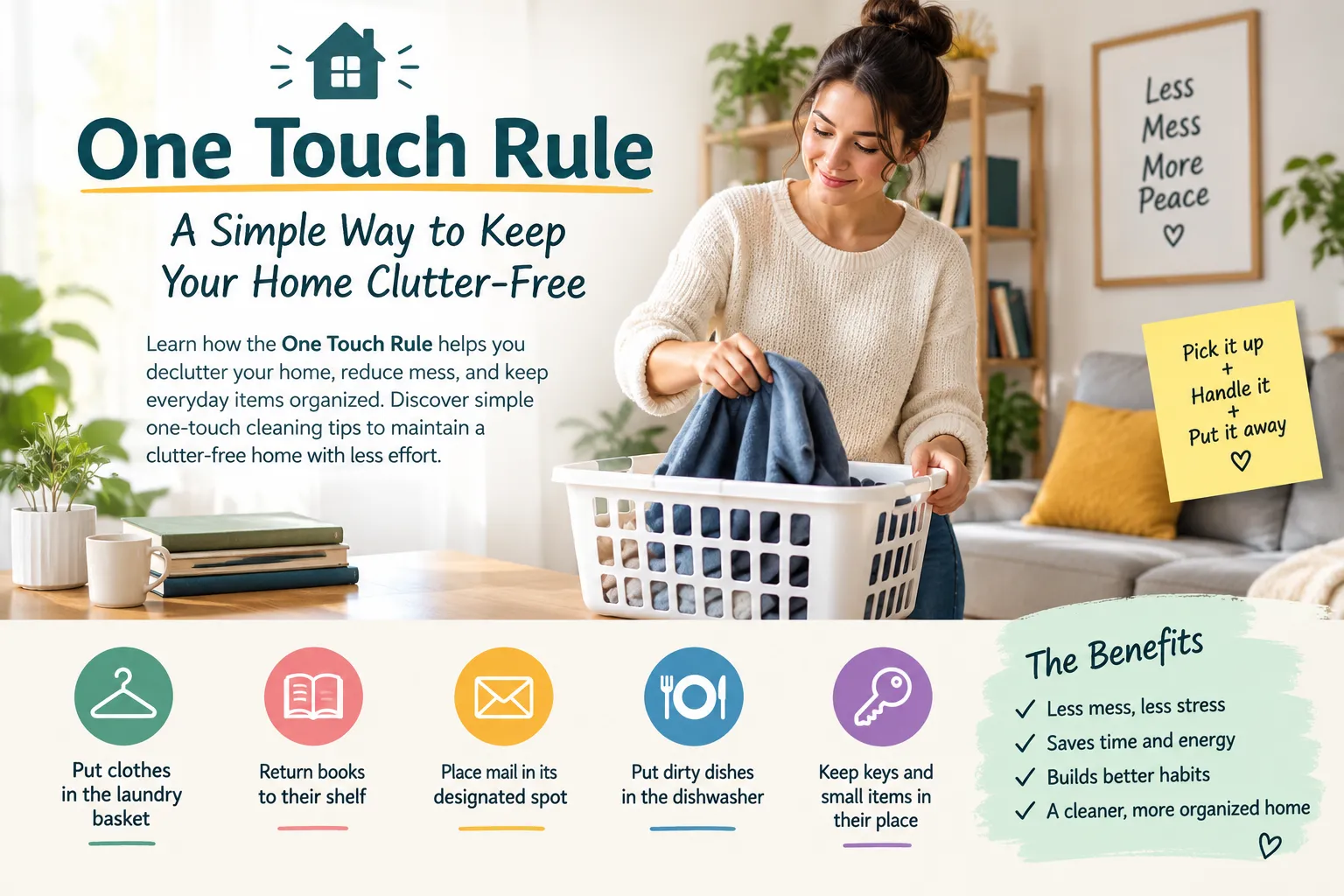
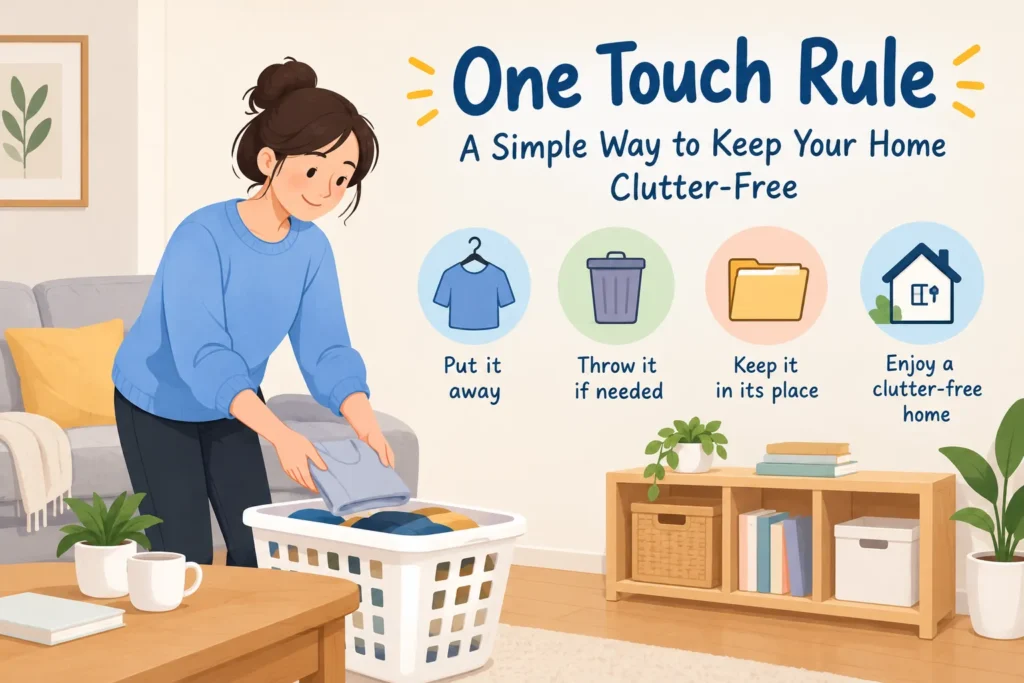
The One Touch Rule is a simple organizing method that encourages you to handle an item when you pick it up instead of putting it down somewhere temporarily. For example, you can place dirty clothes directly in the laundry basket, return a book to its shelf, or put important papers in their designated folder. The goal is to reduce unnecessary handling, make tidying easier, and develop habits that help keep your home organized without spending hours cleaning every day.
What Is the One Touch Rule?
The One Touch Rule is a decluttering and organizing principle that encourages you to make a decision about an item the first time you handle it. Instead of moving something from one surface to another, you put it in its proper place, discard it if appropriate, or create a clear plan for dealing with it. This approach can be useful for everyday household items, including clothing, dishes, mail, toys, and personal belongings.
For example, imagine taking off your jacket when you arrive home. You could leave it on a chair and promise to hang it up later, or you could place it on a coat hanger immediately. The second option completes the task in one step. Although the difference may seem small, applying this habit consistently can reduce the number of unfinished tidying tasks that accumulate throughout the day.
How the One Touch Rule Works in Everyday Life
The principle is straightforward: when you pick up an item, decide where it belongs and take the appropriate action whenever practical. Put dirty dishes in the dishwasher, return remote controls to their usual spot, and place incoming mail in a designated area. These small actions help prevent belongings from spreading across different rooms.
However, the rule does not mean that every task must be completed immediately, regardless of the circumstances. Some activities require more time, attention, or equipment. If you are working on an important task, it may be reasonable to set an item aside temporarily. The purpose is to avoid unnecessary postponement, not to interrupt everything you do.
Why Putting Items Aside Creates More Clutter
Putting items aside can seem convenient because it allows you to postpone small tasks when you are busy. Unfortunately, repeatedly delaying these tasks can create extra work. A sweater left on the sofa may join several other clothes, while unopened mail can gradually cover a desk. Each item becomes part of a growing collection of things that need attention.
Another problem is that temporary storage locations can become permanent. A kitchen counter may turn into a place for shopping bags, keys, receipts, and packaging because everyone assumes they will put those things away later. When several items accumulate, sorting them requires additional decisions and effort. Addressing belongings as you handle them can help prevent this cycle from becoming a regular part of your household routine.
The Difference Between Temporary Mess and Clutter
A certain amount of mess is normal in an active household. Cooking creates dishes, children use toys, and people change clothes throughout the day. A lived-in home does not need to remain perfectly tidy at every moment. The important distinction is whether items are being used or simply left without a clear destination.
Clutter often becomes more difficult to manage when belongings have no designated place or when unnecessary items take up useful space. The One Touch Rule can help with everyday organization, but it cannot solve every underlying problem. If cupboards are already overcrowded, you may also need to remove unused possessions and reconsider how you store the things you keep.
How the One Touch Rule Can Benefit Your Home
One potential benefit of the One Touch Rule is that it reduces repeated handling. When you move an item from a table to a chair and later from the chair to a cupboard, you perform the same organizing task more than once. Returning the item to its proper location immediately can eliminate those extra steps. This can make routine tidying feel more manageable, especially when applied to small tasks throughout the day.
The rule can also support more consistent household habits. When family members know where everyday belongings belong, it becomes easier to return them after use. Clear locations for shoes, bags, keys, toys, and cleaning supplies can reduce confusion and make shared spaces easier to maintain. The results will depend on your home, your schedule, and how consistently the household follows the system.
How It Can Support Productivity
A cluttered environment may make it harder to find the things you need, particularly when important belongings are mixed with unrelated items. Keeping frequently used objects in predictable locations can reduce time spent searching for them. For example, placing your keys in a designated bowl near the entrance makes them easier to locate when you need to leave home.
The Onetouch Rule can also help you approach small responsibilities with a clearer plan. Instead of maintaining a mental list of tasks to complete later, you can resolve simple organizing decisions as they arise. However, the rule is not a guarantee of higher productivity or improved concentration. Its usefulness depends on whether it makes your particular routine simpler and more efficient.
How to Make the One Touch Rule Easier With Home Storage Solutions
The One Touch Rule works best when your home makes it easy to put things away. If an item has no obvious place, you may struggle to complete the task in one step. Start by identifying the belongings that frequently end up on tables, counters, chairs, and floors. Then create practical storage locations that are easy to reach and simple to use.
You do not need to buy expensive organizers to get started. A laundry basket, a small tray for keys, a folder for important documents, or a container for frequently used household items may be enough. The aim is to create a clear destination for each category of belongings. Choose storage that suits your available space and daily habits rather than adding containers that could become another source of clutter.
Create a Home for Everyday Items
Begin with the objects you use most often. Place shoes near the entrance, keep cleaning supplies in an appropriate storage area, and designate a shelf or basket for frequently used accessories. When belongings have predictable locations, returning them becomes easier because you do not need to decide where they belong every time.
It is also important to keep storage practical. If a basket is difficult to reach or a cupboard is already overcrowded, you may be less likely to use it consistently. Make frequently used storage accessible, avoid filling every available space, and review your system when it stops working. A simple arrangement that fits your routine is often more useful than a complicated organizing system.
How to Try the One Touch Rule for a Week
Starting with your entire home can feel overwhelming, particularly if you already have several cluttered areas. Instead, choose one small space, such as your kitchen counter, bedside table, or entryway. For the first day, focus on putting away items immediately after using them. Notice which belongings repeatedly get left behind and consider whether they need a more convenient storage location.
During the following days, gradually apply the same principle to other everyday activities. Hang up your coat, place dishes where they belong, return books to their shelves, and sort incoming papers into appropriate categories. By the end of the week, review which habits felt natural and which ones were difficult to maintain. Keep the actions that genuinely make your routine easier rather than forcing yourself to follow an unrealistic standard.
A Simple Seven-Day Decluttering Plan
Day 1: Choose one area. Clear a small surface and decide where the items used there should go.
Day 2: Focus on clothing. Put worn clothes in the laundry basket and return clean clothes to their proper places.
Day 3: Organize the kitchen. Put dishes away after use and return everyday items to their designated storage areas.
Day 4: Manage incoming papers. Sort mail and documents into clear categories instead of leaving them in piles.
Day 5: Reset shared spaces. Return toys, books, and remote controls to their usual locations.
Day 6: Review storage. Identify items that lack a suitable home and make practical adjustments.
Day 7: Evaluate your progress. Notice what worked, what felt difficult, and which habits you want to continue.
This plan is flexible, so adjust it to fit your household. You do not need to complete every task perfectly. The purpose is to build a manageable routine that helps prevent everyday clutter from accumulating.
How to Stop Feeling Overwhelmed by Cleaning
When your home feels cluttered, looking at every unfinished task at once can make it difficult to know where to begin. Instead of trying to organize everything in one session, choose one manageable task. Put away the items on a single table, clear a small section of a counter, or return a few belongings to their proper places. Completing a small area gives you a clear starting point without requiring you to reorganize the entire house.
It can also help to separate tidying from deeper cleaning. Tidying means returning belongings to their places, while cleaning involves activities such as wiping surfaces, vacuuming, and washing floors. The one-touch rule mainly supports the first activity. If you combine it with a realistic cleaning schedule, you can give each responsibility its own time instead of treating every household task as one enormous job.
What to Do When You Cannot Put Something Away Immediately
Sometimes you cannot complete a task when you first handle an item. You might need to repair it, return it to a shop, ask a family member about it, or organize documents that require careful attention. In these situations, use a designated temporary location and decide when you will address the item. This keeps the task visible without allowing it to spread throughout your home.
Avoid turning temporary storage into a permanent habit. Review your designated area regularly and make sure each item has a clear next step. If you repeatedly postpone the same task, consider whether the process is too complicated or whether the item needs a more suitable home. Adjusting your system can be more effective than expecting yourself to remember dozens of unfinished responsibilities.
Common Mistakes to Avoid When Using the One Touch Rule
One common mistake is expecting yourself to handle every item immediately, even when you are tired, busy, or dealing with something more important. The rule should simplify your routine, not create additional pressure. Use it for practical, everyday actions and allow yourself flexibility when a task requires more time or attention. Consistency matters more than perfection.
Another mistake is trying to organize clutter without addressing excess belongings or inadequate storage. If your cupboards are full and your drawers are difficult to close, returning every item to its assigned location may not be enough. Consider donating or responsibly disposing of items you no longer need, where appropriate, and create storage arrangements that fit what remains. Finally, avoid judging your progress by whether your home looks perfect. A useful organizing system should support everyday living, including normal activities that temporarily create mess.
Conclusion
The One Touch Rule offers a practical approach to household decluttering by encouraging you to put things away when you handle them rather than repeatedly moving them from one place to another. Small actions, such as hanging up a jacket, returning a book to its shelf, or sorting mail when it arrives, can help make everyday organization more manageable.
To get started, choose one area of your home, establish clear storage locations, and practice the rule for a week. Combine it with occasional decluttering and a realistic cleaning routine to address problems that immediate tidying alone cannot solve. Remember that the goal is not to maintain a perfectly spotless home. It is to create a simple, sustainable system that helps your living space remain functional, comfortable, and easier to manage.