
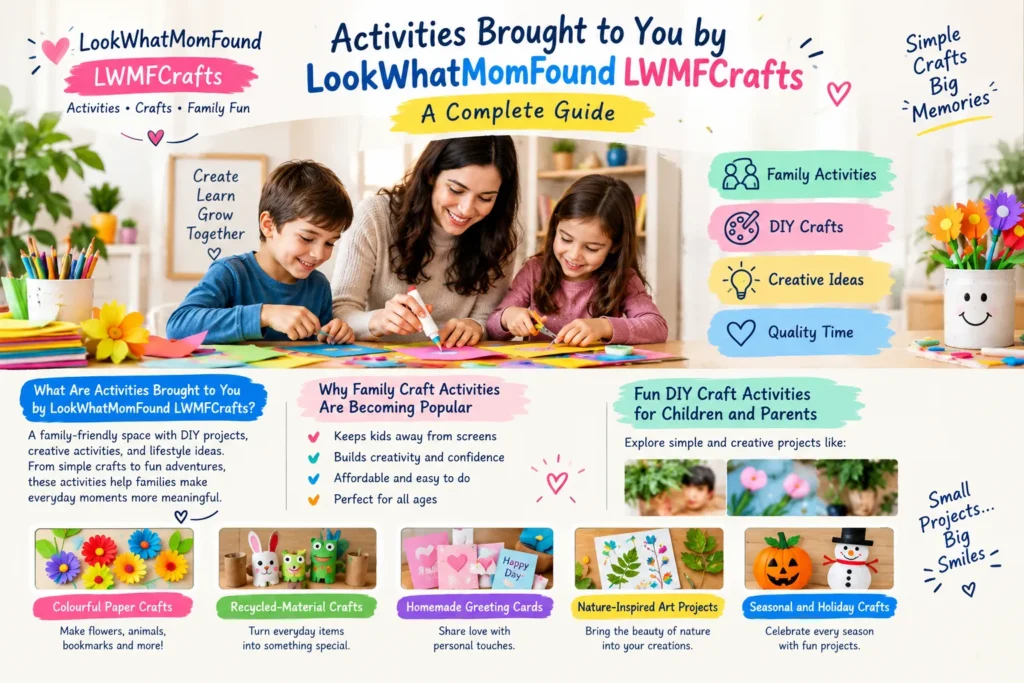
Activities Brought to You by LookWhatMomFound LWMFCrafts: A Complete Guide
Family activities provide an excellent opportunity for parents and children to spend quality time together while learning new skills. Activities Brought to You by LookWhatMomFound LWMFCrafts focuses on the idea of making everyday moments more creative, enjoyable, and meaningful through simple crafts and family-friendly projects. From colourful paper designs to outdoor adventures, these activities can encourage imagination without requiring expensive equipment.
Parents often look for practical ways to keep children entertained at home, especially during weekends, school holidays, and rainy days. Creative projects can turn ordinary household materials into exciting learning opportunities. With suitable planning, families can enjoy activities that combine entertainment, education, teamwork, and personal expression.
What Are Activities Brought to You by LookWhatMomFound LWMFCrafts?
Activities Brought to You by LookWhatMomFound LWMFCrafts is associated with family-oriented content, parenting interests, lifestyle ideas, and activities that encourage enjoyable experiences at home. The LWMFCrafts topic centres on DIY projects and creative activities that families can adapt to their children’s ages, interests, and available materials.
The concept of activities brought to you by LookWhatMomFound LWMFCrafts can be explored through accessible projects such as handmade cards, recycled-material crafts, seasonal decorations, and imaginative games. These ideas offer a starting point for parents who want to introduce creativity into everyday family routines.
Why Family Craft Activities Are Becoming Popular
Family crafts are appealing because they offer an enjoyable alternative to spending all free time watching television or using digital devices. Children can experiment with colours, textures, shapes, and different materials while parents participate in the creative process. Even a short activity can create opportunities for conversation and shared enjoyment.
Another reason for their popularity is affordability. Many projects use paper, cardboard boxes, old magazines, fabric scraps, or leaves collected outdoors. Families do not need professional art supplies to create something interesting. Simple activities can also be adapted for different ages, making them suitable for households with multiple children.
Fun DIY Craft Activities for Children and Parents
DIY crafts encourage children to transform ordinary materials into something personal and imaginative. The best projects are easy to understand, appropriate for the child’s abilities, and flexible enough to allow individual creativity. Parents can prepare the materials beforehand while letting children make choices about colours, designs, and decorations.
When exploring activities brought to you by LookWhatMomFound LWMFCrafts, families can begin with straightforward projects before progressing to more challenging designs. The goal is not to produce perfect artwork but to enjoy the process, learn through experimentation, and build confidence.
Colourful Paper Crafts
Paper crafts are an excellent starting point because paper is inexpensive, widely available, and easy to use. Children can make paper flowers, animals, bookmarks, folded shapes, greeting cards, or colourful wall decorations. Different paper sizes and colours help them experiment with patterns and visual arrangements.
Parents can introduce basic folding, tearing, drawing, and cutting techniques according to each child’s age. Younger children should use child-safe scissors with adult supervision, while adults can handle sharp tools when necessary. Displaying finished creations at home can help children feel proud of their efforts.
Recycled-Material Crafts
Recycled-material crafts teach children that everyday objects can have a second purpose. Empty cardboard boxes can become toy houses, toilet paper rolls can become animal figures, and clean containers can be transformed into pencil holders. These projects combine creativity with simple lessons about reusing materials.
Before starting, parents should check that all items are clean, safe, and suitable for the child’s age. Avoid sharp edges, small detachable pieces for young children, and containers that previously held hazardous substances. Encourage children to plan their designs before assembling the materials.
Homemade Greeting Cards
Handmade greeting cards allow children to express affection and appreciation through personal messages and artwork. They can create birthday cards, thank-you notes, holiday greetings, or cards for family celebrations. Paper, crayons, stickers, and simple drawings are usually enough to make a thoughtful design.
Parents can encourage children to write short messages or dictate their ideas if they are still learning to write. This activity combines creativity with communication and literacy practice. It also teaches children that meaningful gifts do not always need to be expensive or store-bought.
Nature-Inspired Art Projects
Nature-inspired crafts help families explore the environment while collecting ideas for creative work. Children can draw flowers, paint landscapes, create leaf patterns, or arrange fallen leaves into pictures. These projects can introduce basic observations about colours, shapes, textures, and seasonal changes.
Choose materials responsibly and avoid picking protected plants or disturbing wildlife. Parents can also use photographs or drawings when collecting natural objects is inappropriate. After an outdoor walk, children can turn their observations into artwork and discuss what they discovered.
Seasonal and Holiday Decorations
Seasonal crafts offer a fun way to celebrate birthdays, family gatherings, and holidays year-round. Children can create paper garlands, handmade ornaments, themed drawings, or simple table decorations. Changing the activity according to the season keeps familiar craft sessions interesting.
Parents can make these projects more meaningful by explaining the occasion and inviting children to suggest their own designs. Reusable decorations can be stored for future celebrations, reducing waste and saving money. Always choose age-appropriate materials and supervise activities involving glue, scissors, or small decorative pieces.
Indoor Family Activities for Rainy Days and Weekends
Indoor Activities Brought to You by LookWhatMomFound LWMFCrafts are especially useful when the weather keeps kids inside, or families prefer to stay home. A little preparation can turn a living room, dining table, or spare corner into a welcoming creative space. Families can choose activities based on available time, children’s interests, and the materials they already have.
The best indoor projects balance structure with freedom. Parents can explain the basic task, but children should have room to experiment and develop their own ideas.
Create a Family Art Station
A family art station gives children a dedicated place to draw, paint, colour, and create. Arrange paper, washable crayons, child-safe scissors, glue sticks, and reusable craft materials in clearly labelled containers. A protective table covering can make cleanup easier.
The station does not need to occupy an entire room. Even a small table or organised storage box can provide a convenient creative space. Keeping frequently used supplies accessible encourages children to begin projects independently while maintaining appropriate adult supervision.
Organise a Family Craft Challenge
A family craft challenge adds excitement by giving everyone the same task and encouraging different solutions. For example, each family member might create an animal from cardboard or design a greeting card using three colours. Set a comfortable time limit that allows participants to enjoy the activity without feeling rushed.
Celebrate the differences between everyone’s creations instead of selecting only one winner. Parents can ask children to explain their designs and describe what they enjoyed most. This approach supports communication, creativity, and positive family interaction.
Make a Homemade Board Game
Creating a homemade board game combines art, planning, and problem-solving. Children can draw a game board, invent simple rules, design playing pieces, and create question cards. The game might involve collecting points, completing challenges, or moving through an imaginary adventure.
Parents can help make the rules clear and ensure that the game is fair and enjoyable. Once the game is complete, the family can play together and adjust anything that does not work well. Children learn that designing a game often involves testing ideas and making improvements.
Outdoor Activities That Encourage Creativity
Outdoor Activities Brought to You by LookWhatMomFound LWMFCrafts allow children to combine movement, observation, and imaginative play. Gardens, parks, and safe outdoor spaces can provide inspiration for projects that feel different from indoor crafts. Families should choose suitable locations, consider the weather, and supervise children throughout the activity.
Outdoor creativity does not require complicated equipment. Everyday surroundings can inspire games and artwork that encourage curiosity about the natural world.
Sidewalk Chalk Art
Sidewalk chalk art allows children to draw colourful pictures on suitable outdoor surfaces. They can create flowers, animals, imaginary landscapes, hopscotch patterns, or collaborative murals. Parents can suggest a theme while allowing each child to contribute original ideas.
Choose a safe area away from moving vehicles and other hazards. Use washable chalk on surfaces where drawing is permitted, and check whether the material is appropriate for the children involved. Families can photograph their finished artwork before rain or routine cleaning removes it.
Build a Miniature Garden
A miniature garden introduces children to basic gardening and design. Using a suitable container or a small garden area, children can arrange soil, appropriate plants, stones, and simple decorations. They can also draw a plan before deciding where each element should go.
Parents should select non-toxic plants and supervise the handling of soil and gardening tools. Children can help water the garden and observe changes over time. This ongoing activity encourages patience, responsibility, and curiosity about how plants grow.
Create an Outdoor Scavenger Hunt
An outdoor scavenger hunt turns a walk or garden visit into an exploration game. Prepare a list of safe items or observations, such as a round stone, a yellow flower, a bird sound, or a leaf with an interesting shape. Children can check off each discovery as they find it.
The activity can be adjusted for different ages by changing the clues or introducing simple riddles. Avoid collecting items that are unsafe, protected, or harmful to the environment. A scavenger hunt encourages attention to detail while helping children appreciate their surroundings.
Educational Benefits of LWMFCrafts-Inspired Activities
Creative family Activities Brought to you by LookWhatMomFound LWMFCrafts can support several areas of children’s development when projects are suitable for their ages and abilities. Crafts provide opportunities to practise practical skills, express ideas, and work through small challenges. They can also help parents understand their children’s interests and learning preferences.
The educational value of activities brought to you by LookWhatMomFound LWMFCrafts lies in the learning opportunities that can emerge naturally during creative play. Outcomes vary by child and activity, so crafts should complement rather than replace other forms of learning and play.
Developing Fine Motor Skills
Drawing, folding, placing stickers, and handling craft materials help children practise small, controlled hand movements. These actions can support coordination between the hands and eyes. Repeating simple tasks also gives children opportunities to improve control at their own pace.
Choose tools that children can handle comfortably and avoid projects that demand advanced precision too early. Adults should supervise cutting and other potentially hazardous tasks.
Encouraging Problem-Solving
Craft projects often involve deciding how to attach pieces, arrange materials, or make a design stand upright. Children can try different approaches when something does not work as expected. These experiences introduce the idea that mistakes are opportunities to experiment and improve.
Parents can ask questions such as, “What could we try next?” instead of immediately fixing every problem. This encourages children to think independently and develop practical solutions.
Supporting Language and Communication
Crafting creates opportunities to discuss colours, shapes, materials, instructions, and personal ideas. Children can describe what they are making, explain their choices, and ask for help when needed. Parents can introduce new vocabulary naturally during the activity.
Working together also encourages listening and turn-taking. These conversations can make creative time both socially enjoyable and educational.
Building Confidence and Independence
Completing an appropriate project gives children a chance to recognise their own progress. Choosing colours, selecting materials, and making design decisions can help them feel involved and capable. Small achievements may encourage them to attempt new activities in the future.
Parents should focus on effort, experimentation, and persistence rather than perfection. Allowing children to make manageable decisions helps them develop independence without removing the support they need.
Encouraging Cooperation
Group projects teach children to share supplies, exchange ideas, and work toward a common goal. Families can create a large mural, build a cardboard town, or design decorations together. Each participant can contribute according to their interests and abilities.
Clear expectations help prevent disagreements over materials or roles. Praising helpful behaviour and respectful communication can make collaborative crafts more enjoyable for everyone.
How to Choose Age-Appropriate Craft Activities
Selecting an appropriate project makes creative time safer and more enjoyable. Toddlers may benefit from large, easy-to-handle materials and simple supervised activities, while older children may enjoy more detailed designs and multi-step projects. Always consider individual abilities rather than relying on age alone.
Parents should check material labels, avoid choking hazards for young children, and supervise the use of scissors, glue, and other tools. If an activity brought to you by LookWhatMomFound LWMFCrafts becomes frustrating, simplify the instructions or divide the project into smaller steps.
Budget-Friendly Family Crafting Ideas
Activities brought to you by LookWhatMomFound LWMFCrafts can be affordable when families reuse materials and plan projects around items already available at home. Cardboard packaging, scrap paper, old magazines, fabric leftovers, and clean containers can provide plenty of opportunities for experimentation. Before buying supplies, check what can be safely reused.
Set a small craft budget if new materials are necessary and prioritise versatile items that can support several projects. Borrowing ideas from household objects and natural surroundings also helps families avoid unnecessary purchases. Creativity depends more on imagination and participation than expensive equipment.
Common Crafting Mistakes and How to Avoid Them
Family crafts are more enjoyable when parents keep expectations realistic and prepare a suitable workspace. Projects do not always go according to plan, and children may need extra time or assistance. Flexibility helps turn unexpected difficulties into useful learning experiences.
Choosing Projects That Are Too Complicated
Advanced projects can frustrate children when the instructions involve too many steps. Start with a simple version and introduce additional details only when the child feels ready. Breaking tasks into smaller stages can make progress easier to recognise.
Expecting Every Result to Look Perfect
Children’s artwork reflects their own ideas and developing skills. Correcting every uneven line or unusual design may reduce their willingness to experiment. Encourage effort and originality instead of comparing their work with examples or other children’s creations.
Preparing Too Many Materials
An excessive number of supplies can create confusion and make it difficult to focus. Select a manageable collection of materials that suits the chosen project. Additional decorations can be introduced later if they genuinely improve the activity.
Ignoring Cleanup and Organisation
A messy workspace can make future craft sessions harder to organise. Keep a waste container nearby and establish a simple cleanup routine after each project. Children can help return safe materials to labelled storage containers with adult guidance.
Focusing Only on the Finished Product
The main value of a craft activity is not necessarily the final object. Children also benefit from exploring materials, making decisions, and learning from mistakes. Give them time to enjoy the process instead of rushing to complete the project.
How to Make Crafting a Regular Family Habit
Regular creative sessions can become a meaningful part of family life without requiring a strict schedule. Parents might set aside one afternoon each weekend or plan a short activity during school holidays. Keeping a small collection of supplies ready makes it easier to begin.
Invite children to suggest projects and take turns choosing the weekly activity. Families can photograph finished creations or keep selected pieces in a folder to remember their progress. The most important factor is consistency without pressure: crafting should remain an enjoyable shared experience.
Finding Inspiration for Activities Brought to You by LookWhatMomFound LWMFCrafts
Families can find inspiration through children’s interests, seasonal events, library resources, and everyday experiences. A favourite animal might inspire a paper mask, while a family outing could lead to a nature collage or illustrated memory book. Adapting ideas to available supplies makes projects more practical.
For content specifically attributed to Activities Brought to You by LookWhatMomFound LWMFCrafts, consult the website’s current pages. Verify that a project or resource genuinely appears there before presenting it as an official recommendation. Keeping a list of successful activities also helps parents repeat favourites and plan new projects.
Other Activities Brought to You by LookWhatMomFound LWMFCrafts Resources for Families
Activities Brought to you by LookWhatMomFound LWMFCrafts-related topics may extend beyond crafts into other areas of family and lifestyle content. These subjects can interest readers who want to explore different types of practical information. However, each resource should be verified independently before claims are made about its current availability or specific features.
LWMFPets: Pet Guides and Helpful Tips
Pet-related guides can help families explore responsible animal care, everyday routines, and the needs of household pets. Parents can use age-appropriate information to teach children about kindness, supervision, and respecting animals. Always seek qualified veterinary advice for specific health concerns.
LookWhatMomFound Lifestyle Resources
Lifestyle content can cover everyday routines, family organisation, and practical ideas for home life. Readers may use these topics as inspiration for planning activities and making daily routines more manageable. Check the source for the precise subjects it currently covers.
LWMFHotels: Hotel Offers and Price Information
Hotel-related resources can help travellers think about accommodation options, pricing, and trip planning. Before making a booking, compare current rates, location, cancellation policies, and included amenities directly with the provider. Any offers should be checked for availability and applicable conditions.
LWMFMaps: Maps and Location Guides
Maps and location guides can be useful when families plan outings or explore unfamiliar destinations. Check addresses, routes, accessibility, and opening hours using reliable, up-to-date sources before travelling. Do not assume that every listed location or route is current without verification.
Activities Brought to You by LookWhatMomFound LWMFCrafts Giveaways and How to Participate
Giveaways can attract readers who enjoy discovering products or participating in promotional activities. Before entering any giveaway associated with Activities Brought to You by LookWhatMomFound LWMFCrafts, confirm that it is currently active and review its official rules, eligibility requirements, deadlines, and prize details. Never provide sensitive financial information simply to claim a supposed prize.
Conclusion
Activities Brought to you by LookWhatMomFound LWMFCrafts is a useful topic for exploring creative family time, practical DIY projects, and enjoyable learning experiences. From colourful paper crafts and recycled-material creations to outdoor scavenger hunts, families can discover many ways to make ordinary days more engaging without spending much money.
The best approach is to choose activities that match children’s ages, interests, and abilities while allowing room for experimentation. With thoughtful preparation, appropriate supervision, and a focus on participation rather than perfection, crafting can become a rewarding family habit. For official Activities Brought to You by LookWhatMomFound LWMFCrafts projects and related resources, always consult verified sources and confirm current details before relying on specific claims.