
Garage Door: Types, Sizes, Materials, and Buying Guide
A garage door is an important part of a home’s security, appearance, and everyday convenience. It protects vehicles, tools, and stored belongings while improving the property’s overall look. Choosing the right design requires careful consideration of materials, dimensions, insulation, maintenance, and installation costs.
Homeowners can choose from traditional raised-panel designs, modern glass doors, carriage house styles, and practical sectional models. Each option offers different benefits depending on the home’s architecture, available space, climate, and budget. This guide explores common styles, materials, sizes, customization, and maintenance to help you choose the right door for your home.
What Is a Garage Door?
A garage door is a movable barrier that provides access to a garage while helping protect vehicles and other belongings. Depending on its design, it can operate manually or through an electric opener. Residential models are available in various configurations to suit different buildings and household requirements.
Modern designs combine practical features with decorative finishes, making them an important part of exterior home design. Some homeowners prioritize durability and simple maintenance, while others prefer natural wood appearances, large glass panels, or insulated construction. The best choice depends on how the garage is used and which features matter most.
Types of Garage Doors
Different door configurations offer different operating mechanisms, space requirements, and appearances. Understanding the main types helps homeowners compare available options before purchasing a new door or replacing an existing one.
1. Sectional Doors
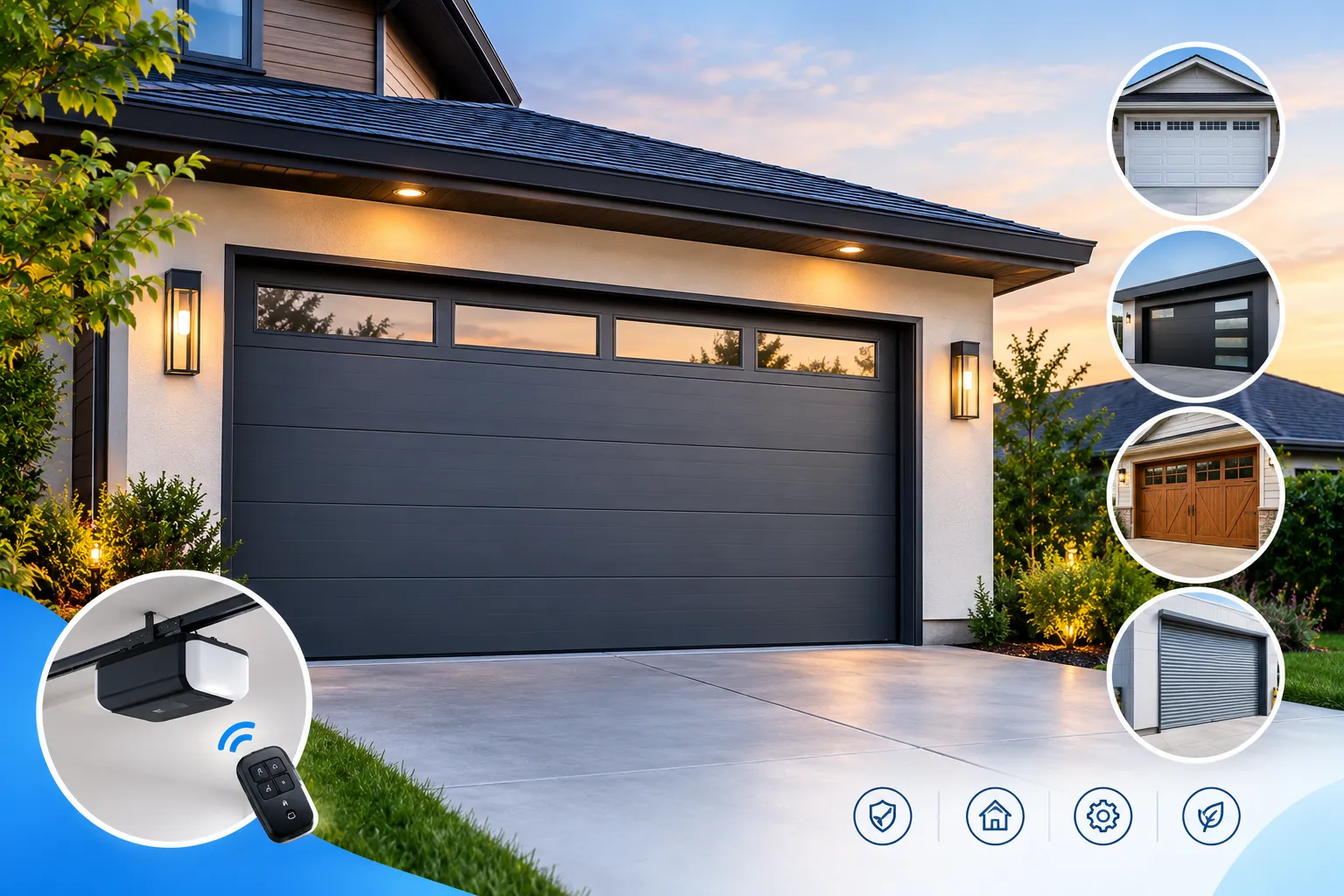
Sectional doors consist of horizontal panels connected by hinges. When opened, the panels travel along tracks and move overhead, allowing vehicles to enter and leave without requiring the entire door to swing outward. This design is suitable for many residential garages.
These doors are available in different materials, colors, window arrangements, and insulation levels. However, they require appropriate overhead clearance and properly installed tracks. Check the available space inside the garage before selecting a sectional model.
2. Traditional and Raised-Panel Doors
Traditional Door designs often feature raised rectangular panels that complement classic home architecture. They are available in different colors and finishes, including simple painted surfaces and decorative wood-look patterns. Their familiar appearance makes them a popular option for conventional residential properties.
When comparing these models, consider panel construction, finish quality, and maintenance requirements. A simple design may be suitable for homeowners who prefer a timeless appearance, while decorative hardware and windows can create a more distinctive exterior.
3. Modern and Contemporary Doors
Modern designs typically feature clean lines, smooth surfaces, horizontal planks, and minimal decorative details. Some models use dark finishes or large glass sections to create a contemporary appearance. These options can complement homes with modern architecture and simple exterior finishes.
Before choosing a contemporary design, consider privacy, sunlight, and cleaning requirements. Glass panels can brighten a garage, but transparent sections may expose stored belongings. Frosted glass or carefully positioned windows can help balance natural light and privacy.
4. Carriage House Doors
Carriage house designs take inspiration from traditional doors once used on carriage houses. They may feature decorative handles, distinctive panel patterns, and wood-look finishes that complement farmhouse, cottage, and traditional properties. Their appearance can add character to a home’s exterior.
Many modern versions operate using an overhead sectional mechanism rather than swinging outward. This arrangement combines a traditional appearance with convenient operation. Compare the available finishes, construction materials, and hardware to find a design that matches your home.
5. Roll-Up Doors
Roll-up models open by moving a curtain or connected slats into a compact coil above the opening. They are frequently used in commercial buildings, storage facilities, and other spaces where their operating configuration is appropriate. Certain residential garages may also accommodate this design.
Before purchasing one, confirm that the model suits your intended use and opening dimensions. Consider operating noise, installation requirements, insulation, and available headroom. A qualified installer can help determine whether a roll-up configuration is suitable for your property.
Garage Door Materials and Their Benefits
Material selection influences durability, appearance, maintenance, and purchase price. Different materials also respond differently to moisture, sunlight, temperature changes, and everyday wear. Comparing these characteristics helps homeowners choose a suitable option for their environment.
Steel Doors
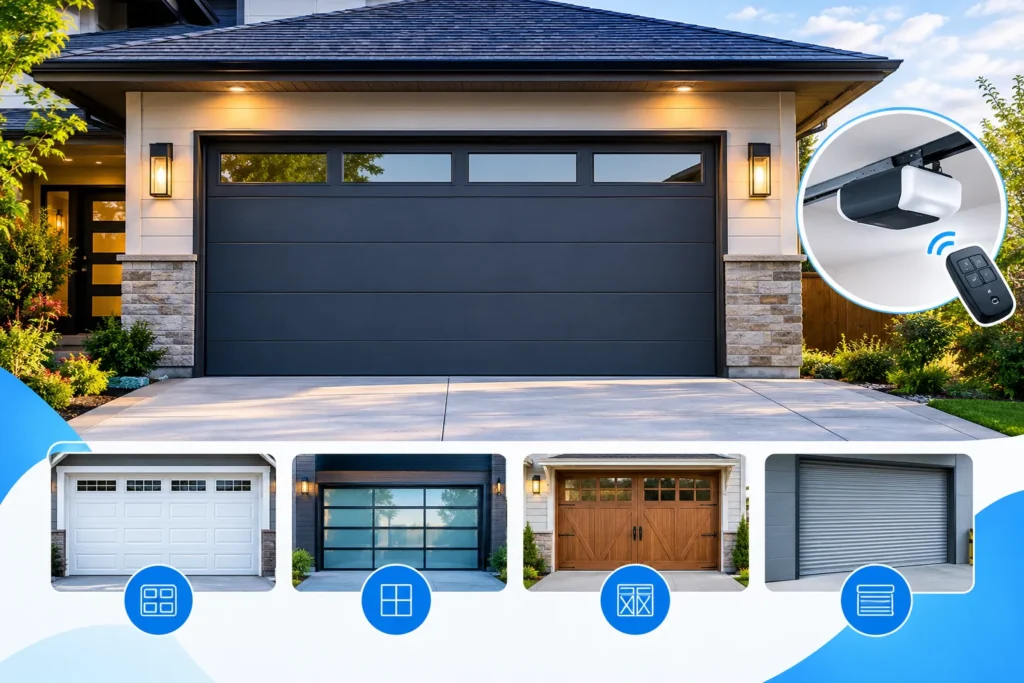
Steel doors are available in numerous panel styles, colors, and finishes. They can provide a practical balance between appearance and everyday functionality, making them worth considering for many residential properties. Some models also include insulation to improve thermal performance.
However, steel can dent, and damaged protective coatings may allow corrosion to develop. Check the finish quality, panel construction, insulation specifications, and warranty before purchasing. Regular inspections can help identify visible damage before it becomes a larger maintenance concern.
Wood Doors
Wood doors offer a natural appearance that can complement traditional and upscale home designs. Different wood species, stains, and decorative patterns allow homeowners to coordinate the door with exterior walls, windows, and architectural details.
Wood generally requires more upkeep than some alternative materials. Moisture, sunlight, and changing weather conditions can affect its finish and condition over time. Consider your local climate, maintenance budget, and willingness to perform periodic care before selecting this material.
Aluminum and Glass Doors
Aluminum frames and glass panels are often used in contemporary designs. They can create a clean appearance and allow natural light into the garage, making the space feel brighter during the day. Available finishes and glazing options vary by manufacturer.
Privacy and thermal performance deserve careful consideration. Clear glass provides visibility, while frosted or tinted options can reduce direct views into the garage. Compare frame construction, glass specifications, safety features, and insulation performance before making a decision.
Common Residential Garage Door Sizes
Choosing the correct dimensions is essential for proper operation and a suitable fit. Common residential openings accommodate single-car or double-car garages, but measurements vary depending on the building. Popular examples include 8 × 7 feet and 9 × 7 feet for single-car garages and 16 × 7 feet or 18 × 7 feet for double-car garages.
Before buying a Garage Door, measure the opening’s width and height and check the clearance needed for tracks, springs, and openers. Never assume a replacement will fit based on advertised dimensions alone. A qualified installer can verify measurements and identify any special requirements, helping you avoid compatibility problems.
Colors, Finishes, and Customization
Color and finish choices can improve a property’s overall appearance. Popular options include white, black, gray, neutral shades, and wood-look finishes. Decorative windows, panel patterns, and custom colors are also available to complement different architectural styles.
When choosing a Door, consider the home’s exterior colors, roof, windows, and entrance. Traditional homes may suit raised panels or carriage house designs, while modern properties often pair well with smooth surfaces. Compare physical samples in natural light and consider maintenance, as some finishes show dirt, scratches, or fading more easily than others.
Insulation and Energy Efficiency
Insulation can be useful when the garage shares walls with living spaces or serves as a workshop. An insulated garage door may reduce heat transfer and improve comfort, depending on its construction and the building’s overall insulation.
Manufacturers use R-values to describe insulation performance, with higher values generally indicating greater resistance to heat flow. Before buying, compare the door’s specifications, seals, and installation quality. Remember that air leakage, wall insulation, and ventilation also affect comfort, so a higher R-value does not guarantee significant energy savings.
How to Choose the Right Garage Door
Start by identifying your priorities, including appearance, durability, insulation, available space, and budget. Homeowners who use the garage mainly for parking may have different needs from those who use it as a workshop or frequently access stored equipment. Compare materials carefully: steel is a practical option for many homes, wood offers a natural appearance but may require more maintenance, and aluminum-and-glass designs can suit modern properties.
Before making a purchase, compare detailed quotations from reputable suppliers. Include the door, opener, installation, hardware, delivery, and any necessary modifications to understand the total cost. Also, review the warranty to check its duration and coverage for parts and labor. Clear product specifications and complete quotations will help you choose a suitable option with confidence.
Installation, Maintenance, and Safety
Proper installation helps a door move smoothly and safely. The process includes checking the opening, fitting tracks and hardware, assembling the panels, balancing the system, and testing the opener and safety mechanisms. Installation requirements may vary depending on the door design and manufacturer’s instructions.
Regular inspections help identify damage, loose components, unusual movement, or changes in operating noise. Keep the tracks clear and follow the manufacturer’s guidance for cleaning, lubrication, and maintenance. High-tension springs can cause serious injuries if handled incorrectly, so avoid adjusting or replacing them without professional training. Contact a qualified technician if the door becomes unbalanced, drops unexpectedly, or stops working normally.
When Should You Replace an Existing Door?
Replacement may be appropriate when panels are severely damaged, the structure has deteriorated, or repeated breakdowns make repairs impractical. Difficulty obtaining compatible replacement parts may also influence the decision. A professional assessment can help determine whether repair or replacement is the more sensible option.
A new installation can provide an opportunity to update the exterior appearance, select a different operating configuration, or improve insulation. However, cosmetic damage and minor mechanical problems do not always require a complete replacement.
Ask a qualified technician to inspect the door and explain the available options. Compare repair costs with the price of a replacement, including installation and hardware. This approach helps you make a decision based on the actual condition of the system rather than appearance alone.
Conclusion
Choosing the right Garage Door requires balancing appearance, material quality, dimensions, insulation, security, and budget. Comparing different styles and construction options helps homeowners identify a product that suits their property and everyday requirements.
Before purchasing, verify the measurements, review product specifications, compare warranties, and arrange suitable installation. Regular inspections and appropriate maintenance can help keep the system operating safely and support its long-term performance.