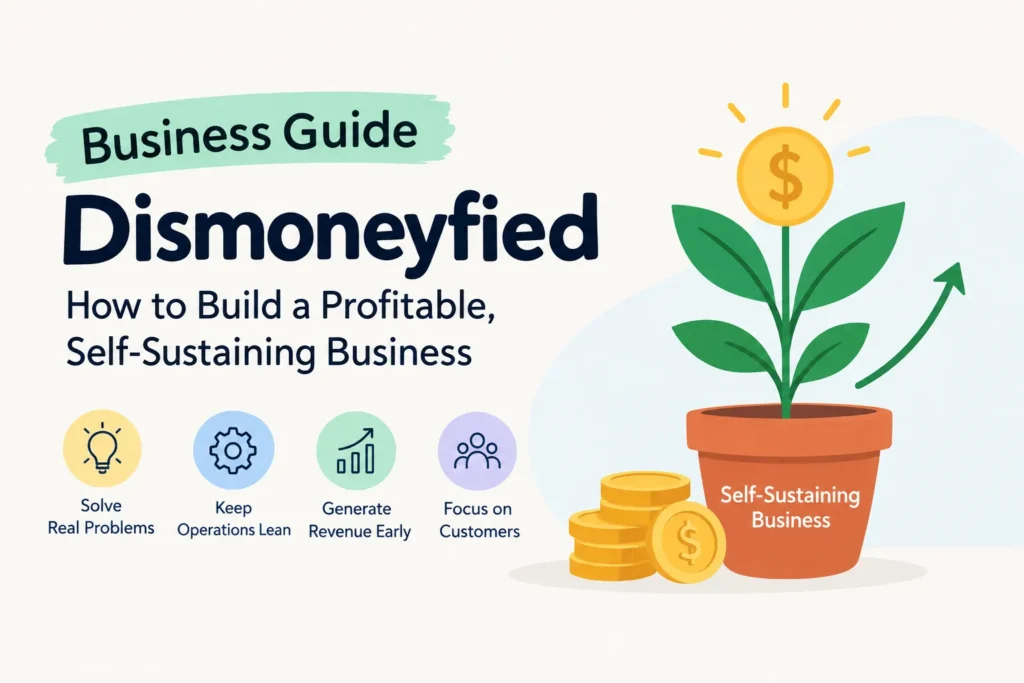
Business Guide Dismoneyfied: How to Build a Profitable, Self-Sustaining Business
Every few years, a new way of thinking about business shows up and quietly changes how founders make decisions. DisMoneyfied is one of those ideas. At its core, it’s a business philosophy that pushes founders to stop treating money-raising as the first milestone of a startup and start treating real problem-solving, lean operations, and early revenue as the actual foundation.
Instead of chasing funding rounds, hype, or vanity metrics, a Dismoneyfied business is built to earn its own way forward from day one. If you’ve ever felt like the “raise money first, figure out profitability later” playbook doesn’t match how you want to build, this guide walks you through what Dismoneyfied actually means, why it works, and exactly how to implement it in your own business.
What Is Business Guide Dismoneyfied?
Before diving into strategy, it helps to understand where this term comes from and what it’s really describing.
Meaning of Dismoneyfied
“Dismoneyfied” combines the prefix “dis-” (to remove or reverse) with “monetize,” and the result describes a business that has deliberately stripped away an over-reliance on external funding, debt, or speculative capital as the engine of growth. A Dismoneyfied business isn’t anti-money; it still needs revenue to survive, but it refuses to let fundraising, investor approval, or borrowed capital dictate its decisions. Growth comes from what the business earns and reinvests, not from what it raises.
In practice, this means founders prioritize:
Where the Term Came From
The idea grew out of a broader shift among small business owners, solopreneurs, and bootstrapped startups who watched the venture-funded model produce flashy failures — companies that raised millions, scaled fast, and collapsed the moment funding dried up. As bootstrapping communities, indie hacker forums, and lean-startup practitioners compared notes, a pattern emerged: businesses that built revenue-first habits tended to survive downturns that wiped out their funded competitors. “Dismoneyfied” became a shorthand for that pattern: a business that has been deliberately untethered from dependency on outside capital.
Dismoneyfied vs. Traditional Business Approaches
Traditional startup thinking, especially in tech and venture-backed circles, often follows a sequence: raise a seed round, build a team, spend on growth, worry about profit later. The Dismoneyfied approach flips that sequence almost entirely.
| Traditional Approach | Dismoneyfied Approach |
| Raise capital to fund growth | Earn revenue to fund growth |
| Scale team and spend early | Keep the team and spend lean until revenue justifies growth |
| Chase user growth first, monetization later | Validate willingness to pay before scaling users |
| Success measured by valuation | Success measured by cash flow and profit margin |
| Investors set the pace | Customers and revenue set the pace |
Neither approach is universally “better”; a capital-intensive business like a biotech startup or a hardware manufacturer may genuinely need outside investment to reach its first product. But for service businesses, digital products, subscription tools, and most small to mid-sized companies, the Dismoneyfied model reduces risk, keeps founders in control, and forces discipline that tends to produce healthier long-term businesses.
Key Principles of the Dismoneyfied Business Model
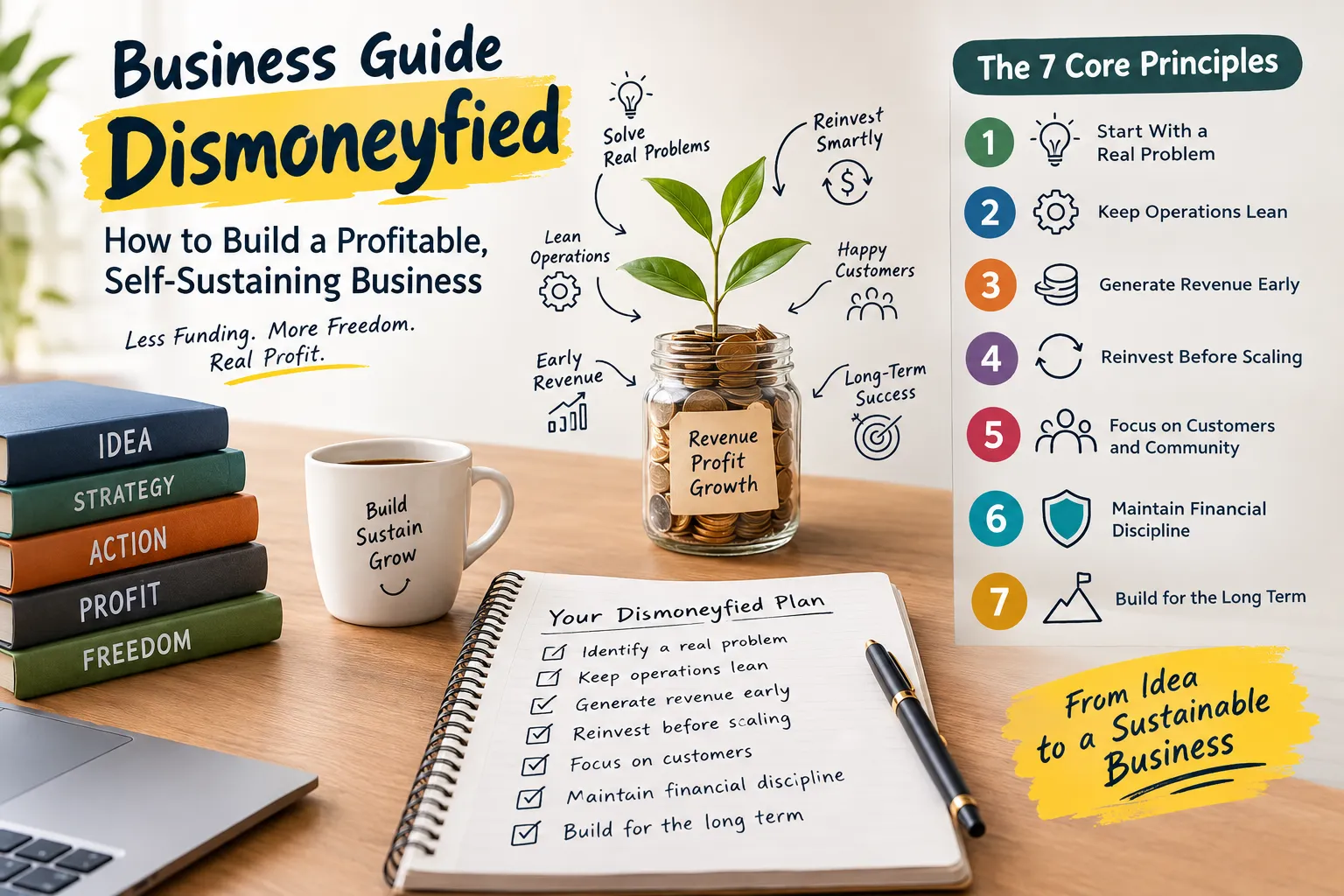
The Dismoneyfied philosophy rests on seven core principles. Together, they form a repeatable framework rather than a one-time decision.
Start With a Real Problem
Every Dismoneyfied business begins with a genuine, verifiable pain point, not a hypothetical one. Founders spend time talking to potential customers, studying competitors, and reading complaints in forums, reviews, and social media before writing a single line of code or spending on branding. The test is simple: would someone pay for a solution to this problem today, with their own money, without being convinced by a pitch deck?
Keep Operations Lean
Lean operations don’t mean cheap for the sake of being cheap; they mean spending only on what directly moves the business toward revenue or customer value. This often looks like:
- Using free or low-cost tools before investing in enterprise software
- Outsourcing specialized tasks instead of hiring full-time too early
- Working from home or shared spaces instead of signing long leases
- Automating repetitive tasks rather than hiring for them
Generate Revenue Early
Rather than spending months building a “perfect” product before charging anyone, disintermediated businesses look for the earliest possible point to introduce a price tag, even a small one. Early revenue does two things: it validates that people genuinely want the offering, and it starts building the cash reserve that funds the next stage of growth.
Reinvest Before Scaling
Profit isn’t pocketed immediately in a Dismoneyfied business; a portion is deliberately reinvested into product improvements, marketing that has proven ROI, or operational upgrades. But this reinvestment is measured against actual returns, not projections. If a marketing channel isn’t converting, spending stops there and shifts elsewhere.
Focus on Customers and Community
Because there’s no investor to impress, the customer becomes the primary stakeholder. DisMoneyfied businesses tend to build tight feedback loops, surveys, direct conversations, community groups, and treat customer retention as more valuable than customer acquisition alone.
Maintain Financial Transparency
Founders who adopt this model track their numbers closely: revenue, costs, margins, and runway are reviewed regularly, often weekly. This isn’t just good bookkeeping; it’s a decision-making tool. When the numbers are visible, bad spending decisions get caught early instead of discovered during a crisis.
Measure Success Beyond Income
While profitability matters, Dismoneyfied businesses also track qualitative signals: customer satisfaction, retention rate, referral rate, and founder well-being. A business that makes money but burns out its founder or churns its customers isn’t considered a Dismoneyfied success; sustainability is part of the definition.
How to Implement the Dismoneyfied Model
Understanding the philosophy is one thing; applying it is another. Here’s a step-by-step approach to building a Dismoneyfied business from the ground up.
Step 1: Define Your Value Proposition
Write a single, clear sentence describing what problem you solve, for whom, and why your solution is better than doing nothing or using an existing alternative. If you can’t say it in one sentence, it likely isn’t clear enough yet.
Step 2: Identify and Validate a Real Problem
Before building anything, talk to at least 15–20 people who fit your target customer profile. Ask about their current frustrations, what they’ve already tried, and what they’d be willing to pay to fix it. Look for patterns rather than isolated opinions.
Step 3: Develop and Test an MVP
Build the smallest possible version of your solution, a minimum viable product (MVP) that lets real users experience the core value. This could be a simple landing page with a waitlist, a manual service delivered by hand before automating it, or a basic app with just one feature.
Step 4: Establish Early Revenue Streams
As soon as your MVP delivers value, introduce pricing. Even a modest fee, a pre-order, or a paid pilot program tells you far more than free usage numbers ever will. Early revenue is proof, not just income.
Step 5: Streamline Operations and Control Costs
Audit every recurring expense. Ask whether each tool, subscription, or service directly contributes to revenue or customer experience. Cut or downgrade anything that doesn’t. Keep your cost structure flexible enough to adjust quickly if revenue dips.
Step 6: Track Results and Iterate
Set up simple dashboards or spreadsheets to monitor revenue, costs, churn, and customer feedback weekly. Use this data to decide what to build next, what to stop doing, and where to reinvest.
Step 7: Reinvest and Scale Strategically
Once a channel, product feature, or service line proves profitable, reinvest a portion of profits into scaling it further: more inventory, more marketing spend in that specific channel, or additional staff dedicated to that function. Growth stays tied to proven results rather than optimism.
Benefits of Adopting the Dismoneyfied Model
Businesses that follow this framework tend to see several recurring advantages:
Tools, Frameworks, and Resources
Implementing the Dismoneyfied model doesn’t require expensive software. Common tools founders rely on include:
The common thread across all of these tools is that they cost little or nothing to start and scale in cost only as revenue justifies it.
Case Studies: De-monetized Business in Practice
1: Digital Productivity Startup
A two-person team building a task management tool skipped outside funding entirely. They launched a paid beta at a low monthly price to 50 early users recruited from online communities, used that revenue to fund basic marketing, and reinvested profits into new features only after user demand justified them. Within a year, the tool had grown a modest but loyal paying user base without ever raising outside capital.
2: Subscription-Based Fitness Service
A personal trainer built an online coaching subscription by starting with existing in-person clients, testing pricing directly with them, and using their feedback to shape the service before opening it to a wider audience. Operational costs stayed minimal because the trainer used off-the-shelf video and scheduling tools rather than building custom software.
3: Freelance or Local Service Business
A local cleaning service scaled from one owner-operator to a small team by reinvesting every dollar of profit into hiring one additional cleaner at a time, only after demand consistently exceeded capacity. No loans, no investors, just steady, revenue-funded growth.
When the Dismoneyfied Approach Does Not Fit
Not every business can or should follow this model. Capital-intensive industries — hardware manufacturing, biotech, infrastructure — or businesses requiring large upfront inventory or regulatory approval often need outside funding simply to reach a sellable product. In these cases, a hybrid approach, where some funding is raised but spent under disciplined discipline, tends to work better than either extreme.
Common Mistakes and Pitfalls to Avoid
Is the Dismoneyfied Business Model Right for You?
This model tends to suit founders who value control over speed, who are comfortable growing gradually, and who have a product or service that can reach paying customers without massive upfront capital. It’s a strong fit for consultants, freelancers, digital product creators, local service businesses, and early-stage SaaS companies.
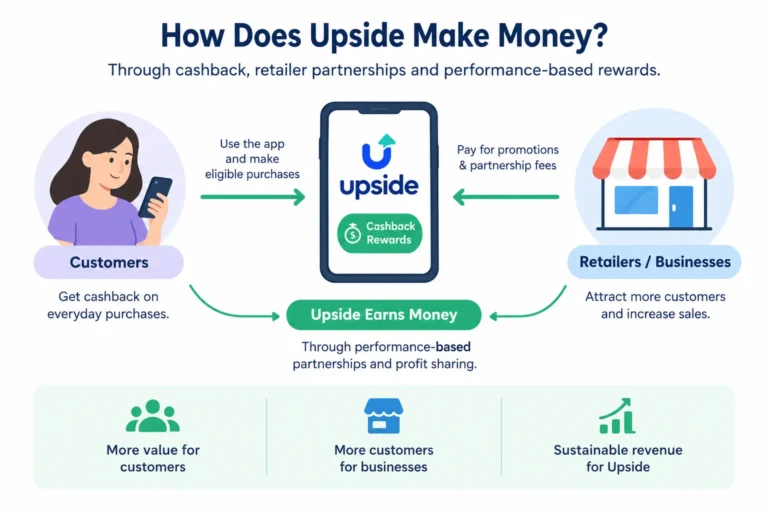
It’s a weaker fit for ventures that genuinely require significant capital before generating any revenue, such as manufacturing-heavy or highly regulated industries. Understanding How Does Upside Make Money can also provide useful insight into how a business generates revenue and evaluates its business model before investing.
When to Change Your Investment or Growth Strategy
Even a committed Dismoneyfied founder may eventually consider outside capital or a faster growth strategy, and that’s not a failure of the model. Signs it might be time to shift include:
The key difference from the traditional approach is timing: funding is pursued after proof exists, not before, which typically means better terms and less dilution for the founder.
Conclusion
The Dismoneyfied model isn’t a rejection of ambition; it’s a redefinition of how ambition gets funded. By starting with a real problem, keeping operations lean, generating revenue early, and reinvesting deliberately, founders build businesses that answer to their customers first and their bank balance second, rather than to investors and projections. It’s a slower path in some ways, but it’s also a sturdier one, built on proof rather than promises.