
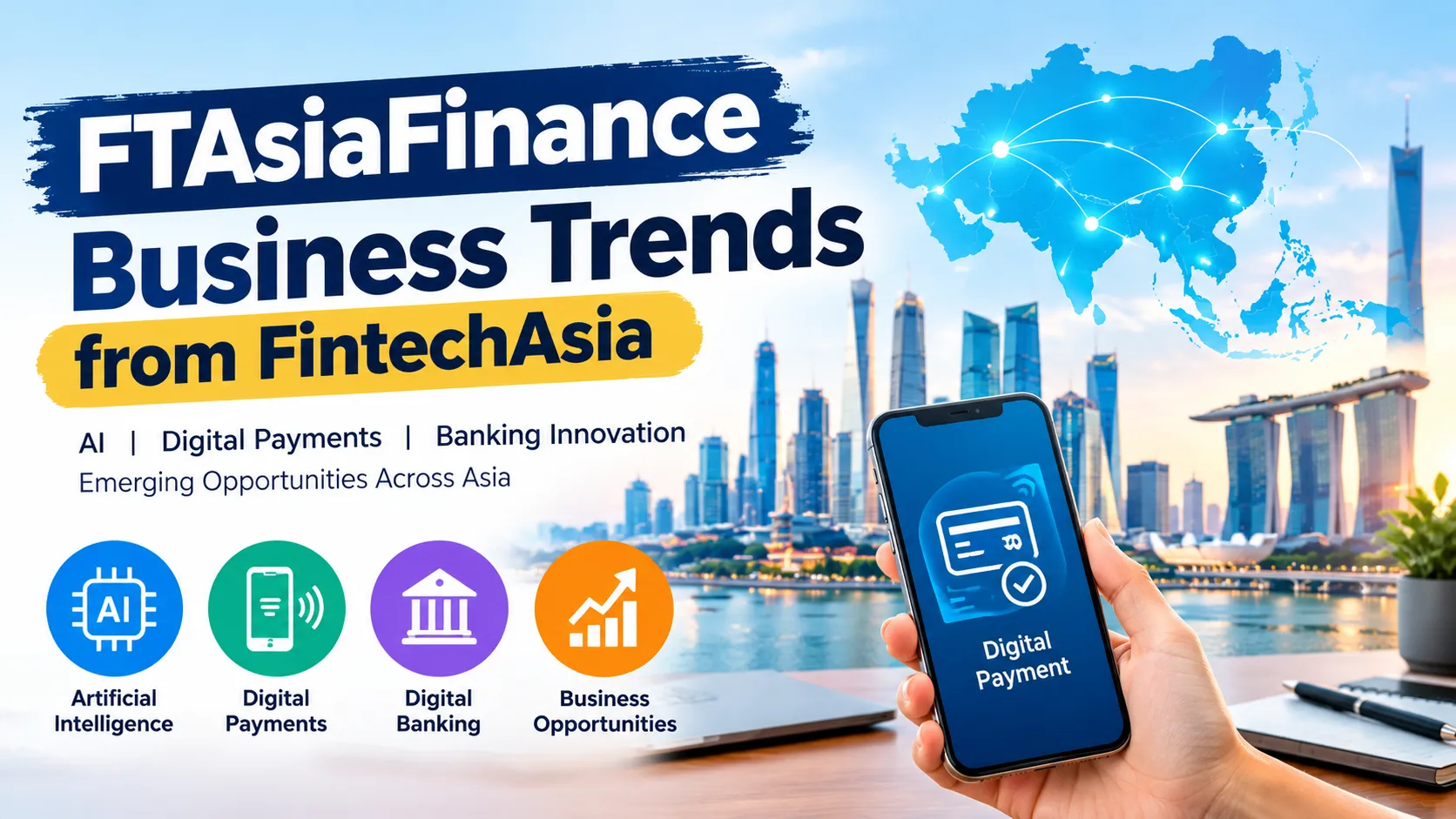
FTAsiaFinance Business Trends from FintechAsia: A 2026 Guide
The phrase ftasiafinance business trends from fintechasia reflects growing interest in financial technology, digital banking, business innovation, and shifting financial markets across Asia. Businesses are increasingly using digital payments, artificial intelligence (AI), online financial services, and data-driven systems to improve customer experiences and daily operations. These developments create opportunities but also introduce challenges related to security, regulation, and long-term profitability.
It is important to clarify that this keyword is not the name of a recognized financial index or official industry standard. The exact relationship between FTAsiaFinance and FintechAsia is also not clearly established by reliable public evidence. Therefore, this guide focuses on the wider Asian fintech trends associated with the search term and explains how businesses can evaluate them using practical examples and credible industry research.
What Does FTAsiaFinance Business Trends from FintechAsia Mean?
In practical terms, ftasiafinance business trends from fintechasia can be understood as a search phrase for exploring changes in Asian business and financial technology. These changes include how people make payments, how companies provide financial services, and how banks use technology to manage operations. The topic also covers investment conditions, customer expectations, and emerging business opportunities.
However, readers should distinguish between an online article’s interpretation of a trend and independently verified market evidence. A useful analysis should explain what is changing, why it matters, and what evidence supports the conclusion. For investment or business decisions, readers should also consult official regulators, company reports, and established research organizations.
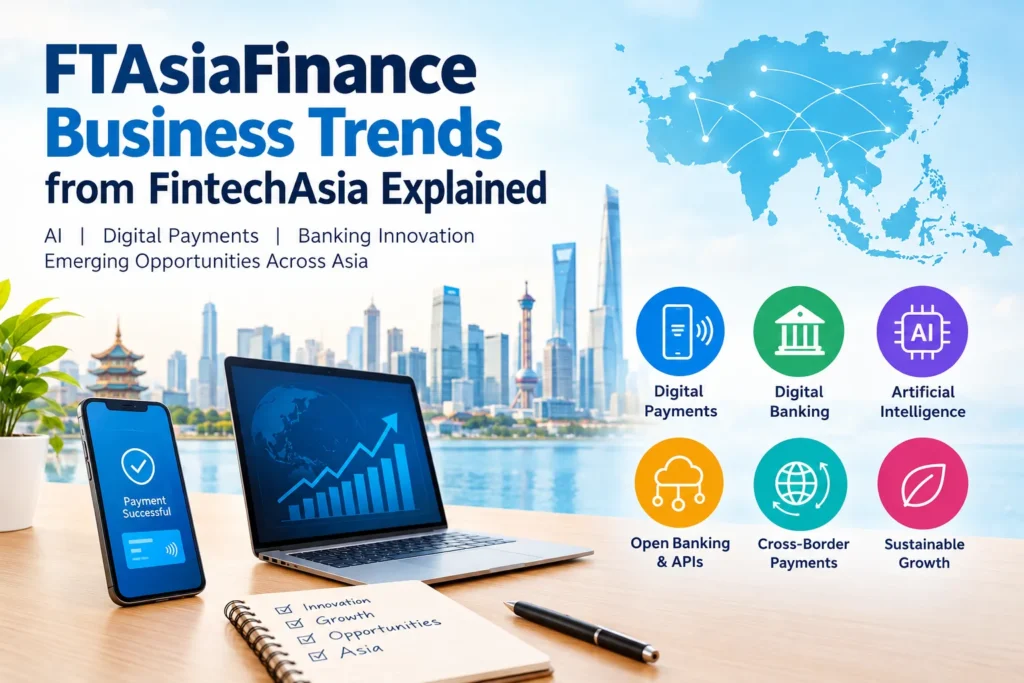
Why These Business Trends Matter in 2026
Financial technology affects businesses far beyond banks and payment companies. Online retailers, small businesses, service providers, and international companies all depend on reliable ways to accept payments, manage cash flow, protect customer information, and reach new markets. Understanding industry changes helps business owners make better decisions about technology, staffing, customer service, and spending.
The broader fintech industry is also placing greater emphasis on sustainable growth, operational efficiency, and regulatory maturity. McKinsey’s 2026 fintech analysis highlights the importance of balancing growth with profitability and stronger operations. For businesses, this means that adopting new technology is not enough; the technology must solve a genuine problem and deliver measurable value.
Market Signals Shaping Asian Fintech
Market signals help businesses understand how financial services and customer behavior may be changing. These signals can include the adoption of digital payments, new financial regulations, changing investment activity, demand for online services, and improvements in digital infrastructure. Reviewing several indicators together is more useful than relying on one headline or prediction.
FintechAsia business trends from FintechAsia can monitor these signals through central-bank announcements, regulator updates, company financial reports, customer surveys, and credible industry studies. They should also compare information across different Asian markets because regulations, infrastructure, income levels, and customer needs vary considerably. A trend that works well in one country may require a different approach elsewhere.
Key Trends Behind FTAsiaFinance Business Trends from FintechAsia
Digital Payments and Financial Inclusion
Digital wallets, QR payments, mobile banking, and instant transfers make it easier for customers and businesses to move money electronically. For a small retailer, accepting digital payments can reduce reliance on cash and make transaction records easier to track. Customers may also benefit from more convenient ways to pay for products and services.
Digital Banking and Embedded Finance
Digital banking allows customers to access financial services through websites and mobile applications rather than relying entirely on physical branches. Common features include account management, digital transfers, online applications, and electronic statements. For customers, these services can offer convenience, while businesses may benefit from faster transactions and easier account access.
Artificial Intelligence and Business Automation
AI is becoming an important area of financial technology because it can help analyze large amounts of data and automate repetitive tasks. Financial institutions may use AI-supported systems to identify unusual transactions, assist customer service teams, organize documents, or support risk analysis. When properly tested, these applications can help employees work more efficiently.
Open Banking and API-Based Services
Open banking generally involves securely sharing financial data with authorized third parties, subject to applicable rules and customer permissions. Application programming interfaces, or APIs, allow different software systems to communicate. These capabilities can help businesses connect payment services, accounting software, and financial applications without manually transferring every piece of information.
Cross-Border Payments and Digital Commerce
Companies using ftasiafinance business trends from fintechasia can explore how international payment services help businesses collect money, pay suppliers, and manage different currencies. Cross-border payment solutions can simplify transactions and improve tracking for online sellers, freelancers, exporters, and small businesses working with overseas clients.
Blockchain and Tokenisation
Blockchain is a type of distributed ledger that records transactions across a network. In financial services, some organizations explore this technology for settlement, recordkeeping, and tokenisation, which involves representing certain assets digitally. These applications may offer benefits in specific settings, but they are not automatically cheaper, safer, or more efficient than existing systems.
Asia’s Role in Financial Technology
Asia is not one uniform fintech market. Economies across the region differ in digital infrastructure, regulation, banking access, consumer preferences, and business maturity. Some markets have well-developed digital payment systems, while others are still working to improve access, connectivity, and financial services for underserved communities.
This diversity creates different opportunities for banks, startups, merchants, and technology providers. A company entering a new market should research local payment habits, language needs, customer expectations, licensing rules, and available infrastructure. The Asian Development Bank’s research on fintech in Central Asia, for example, discusses the potential role of digital finance, open banking, and regional cooperation in supporting inclusion and trade.
Business Opportunities in the Changing Fintech Landscape
Businesses can benefit from ftasiafinance business trends from fintechasia without becoming financial institutions. Opportunities include improving online checkout, automating accounting, strengthening cybersecurity, and connecting digital services. Smaller companies can start with affordable, targeted solutions and expand gradually after confirming their value.
Potential areas to investigate include:
These are areas to research, not guaranteed opportunities for profit. Before launching a product, business owners should interview potential customers, study competitors, estimate operating costs, and test whether customers are willing to pay. They should also confirm whether a proposed service requires a licence or specialist approval.
Benefits and Risks of Fintech Innovation
FTAsiaFinance business trends from FintechAsia highlight how financial technology can improve convenience, speed, and operational efficiency. Automated records help businesses monitor cash flow, while digital services make it easier to reach customers beyond local markets. Well-designed systems can also reduce repetitive tasks and support more consistent business processes.
At the same time, digital dependence can introduce operational, financial, and reputational risks. Service outages, cyberattacks, misleading financial products, and poorly managed data can harm both companies and customers. The best approach is to weigh expected benefits against the costs, risks, and resources needed to operate a service responsibly.
Cybersecurity and Data Protection
Financial services handle valuable information, making security a central concern for businesses adopting digital systems. Weak passwords, stolen credentials, phishing messages, and poorly configured software can expose accounts or sensitive customer data. Smaller companies may be particularly vulnerable if they lack dedicated security staff or clear internal procedures.
Basic safeguards can reduce avoidable risks. Businesses should use multifactor authentication, keep software updated, restrict access to sensitive information, train staff to identify suspicious messages, and maintain secure backups. They should also review vendors carefully and prepare a response plan for suspected data breaches or account compromise.
Regulation, Compliance, and Market Uncertainty
Financial services are subject to rules that vary by country and activity. FTAsiaFinance business trends from FintechAsia highlight why businesses should understand regulations covering payment processing, lending, investment services, digital assets, and customer identity checks. Companies operating internationally should verify local requirements because approval in one market does not automatically authorize operations in another.
Compliance should be part of business planning from the beginning rather than an afterthought. Before launching a financial product, organizations should check relevant regulator guidance, licensing requirements, consumer-protection obligations, and data rules. The Asian Development Bank has also noted that fintech and regulatory technology can support inclusion while introducing risks such as identity fraud and technology misuse.
How Businesses Can Prepare for Future Fintech Trends
A practical strategy begins with the needs of customers and employees, not with the newest technology. Businesses should identify a specific problem, compare available solutions, and test a small implementation before committing to a larger investment. Clear goals make it easier to decide whether a technology is improving performance.
A useful checklist is:
Companies should also keep up with official announcements and credible industry research. Forecasts can help identify questions worth investigating, but they should not replace evidence or professional advice. A flexible strategy allows a business to respond when customer needs, regulations, or market conditions change.
What Lies Ahead for FTAsiaFinance Business Trends from FintechAsia?
The wider fintech landscape is likely to keep evolving as businesses explore AI, digital payments, connected financial services, and more efficient payment infrastructure. The important question is not simply which technology becomes popular, but whether it provides a reliable benefit to customers and businesses. Strong security, responsible product design, and sound financial management will remain important alongside innovation.
For readers researching ftasiafinance business trends from fintechasia, the most useful approach is to treat the phrase as a starting point for understanding broader developments rather than as an official market indicator. Compare claims with trusted sources, distinguish established practices from experimental ideas, and evaluate opportunities in the context of a specific market. This approach supports better-informed decisions without relying on hype or unsupported predictions.
Conclusion
The key themes associated with ftasiafinance business trends from fintechasia reflect broader changes in how businesses and financial institutions use technology across Asian markets. Digital payments, AI, embedded finance, open banking, and cross-border services can create useful opportunities, but their value depends on responsible implementation and genuine customer needs.
Businesses should focus on practical results, strong security, regulatory compliance, and sustainable growth instead of following every new trend. Readers should also verify important claims through reliable sources and remember that market conditions differ across countries. With careful research and a clear strategy, businesses can make better decisions about financial technology and prepare for future changes.