Understanding Pest Infestation and Why It Happens
Pests can enter a home, workplace, or commercial building without being noticed immediately. What starts with a few insects or occasional rodent activity can turn into a fly-by-night problem when food, moisture, and hiding places are available. Recognizing the warning signs early can help prevent property damage, contamination, and unnecessary health concerns.
A Pest Infestation occurs when unwanted insects, rodents, or other organisms establish themselves in an area and become difficult to control through ordinary cleaning or occasional removal. Understanding how these problems develop, what evidence to look for, and what actions to take can help you protect your surroundings and prevent the situation from worsening.
What Is a Pest Infestation?
Pest Infestation happens when unwanted organisms enter an environment, find suitable conditions, and begin living or reproducing there. Common examples include cockroaches in kitchens, mice inside walls, termites in wooden structures, and ants around food storage areas.
The number of pests alone does not always determine whether an infestation exists. Their activity, reproduction, repeated presence, and the evidence they leave behind are also important. For example, regularly finding droppings, damaged packaging, or insect eggs may indicate an established pest population rather than an isolated encounter.
When Does a Pest Problem Become an Infestation?
A single insect or rodent sighting does not automatically mean a building has a serious pest problem. An insect may enter through an open window, while a mouse might occasionally explore an area in search of food. However, repeated sightings and other signs deserve closer attention.
The situation becomes more concerning when pests repeatedly appear, establish nesting areas, reproduce, or spread into different parts of a property. Finding fresh droppings in several locations, hearing regular movement inside walls, or discovering damaged food containers can suggest ongoing activity that requires investigation.
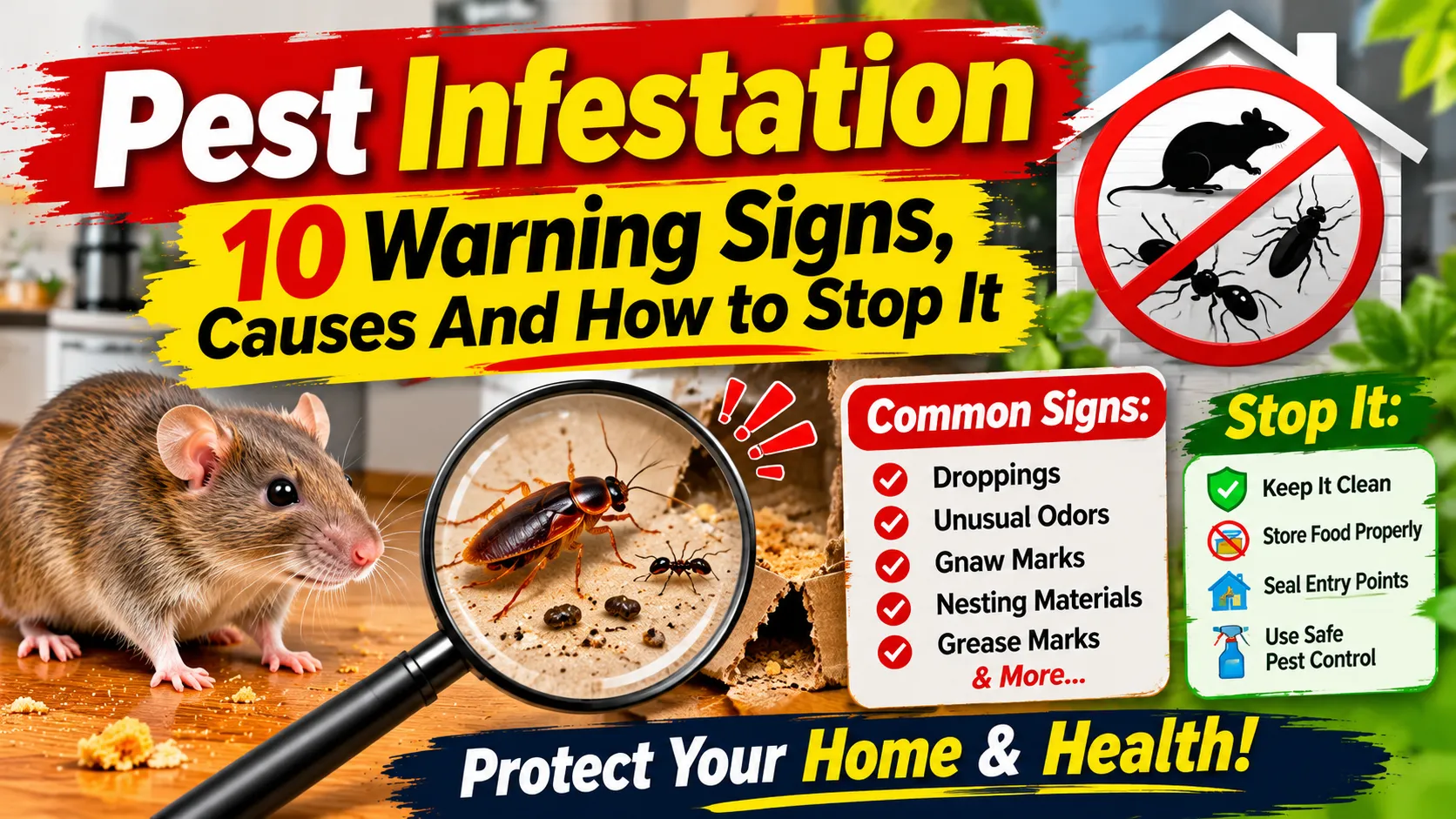
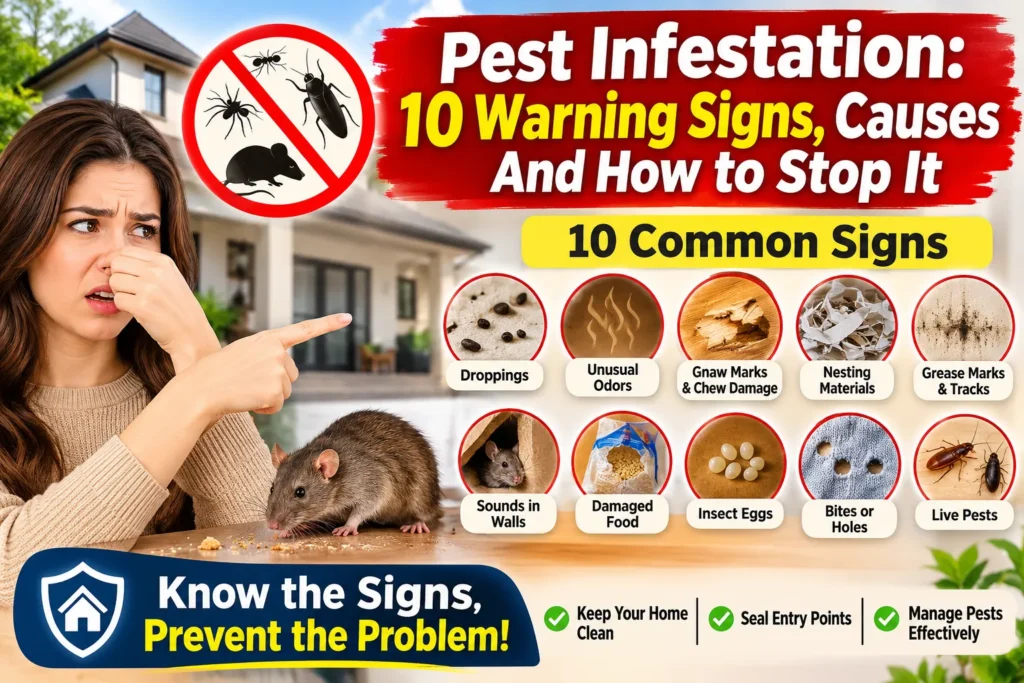
10 Common Signs of a Pest Infestation
Pests are not always visible during the day. Many insects and rodents remain hidden in dark corners, storage areas, wall cavities, and other protected spaces. However, their activity often leaves physical evidence that can help property owners identify a developing problem.
The following signs can help you recognize unwanted pest activity before it causes more extensive damage.
Droppings
Droppings are among the most recognizable signs of rodents and certain insects. Mouse and rat droppings may appear near cupboards, food storage areas, behind appliances, or along walls. Their size and shape can sometimes help distinguish between different rodent species.
Cockroaches also leave small dark droppings that may resemble ground pepper or coffee particles. If you discover these materials, avoid touching them directly. Use appropriate protective equipment and follow local public health guidance for safe cleaning.
Unusual Odors
Some pests produce noticeable smells through their waste, nesting materials, or natural body odors. A persistent musty, oily, or unpleasant smell in a cupboard, basement, or enclosed space may indicate hidden pest activity.
Different infestations can produce different odors, so smell alone cannot confirm the type of pest involved. If an unusual smell continues despite normal cleaning, inspect nearby storage spaces and hidden areas for additional evidence.
Gnaw Marks and Chew Damage
Rodents often chew through materials to maintain their teeth and create access to food or nesting spaces. These activities are common signs of Pest Infestation, leaving scratches, rough edges, and small holes in cardboard boxes, wooden furniture, plastic containers, and electrical insulation.
Look closely at food packaging, cabinet corners, and areas near pipes. Fresh chew marks may indicate recent activity, while older damage can suggest that pests have been present for some time.
Nesting Materials
Mice, rats, and some insects use available materials to create protected nesting areas. Shredded paper, fabric, cardboard, dry leaves, and insulation may be collected in quiet spaces.
Check storage rooms, unused cupboards, garages, and areas beneath furniture. Discovering a nest alongside droppings or other evidence can indicate that pests are living and reproducing inside the property.
Grease Marks and Tracks
Rodents often follow familiar paths along walls, behind appliances, and around storage areas. Repeated movement can leave dark, greasy marks on surfaces where their bodies rub against walls or nearby objects, providing another possible sign of Pest Infestation.
Damaged Fabrics
Small holes, thinning fabric, shed skins, and insect larvae in storage areas can indicate activity. Inspect clothing that remains unused for long periods, particularly when it is stored in dark or poorly ventilated spaces.
Sounds in Walls, Ceilings, or Under Floors
Scratching, squeaking, scurrying, and occasional chewing noises may indicate animals moving through hidden spaces. These sounds are particularly noticeable at night when household activity decreases.
However, not every unusual noise comes from pests. Pipes, ventilation systems, and building materials can also produce sounds. Repeated movement in the same location, especially when combined with other signs, deserves investigation.
Dead Insects Indoors
Finding dead insects near windows, light fixtures, cupboards, or doorways can indicate that insects are entering the building. Repeated discoveries in the same location may suggest a nearby entry point or hiding area.
A single dead insect is not necessarily evidence of an established problem. However, large numbers of dead insects, shed skins, or visible eggs should encourage a more thorough inspection.
Structural Damage
Certain pests can damage building materials over time. Termites consume wood, while rodents may chew insulation, wiring coverings, and other accessible materials.
Warning signs include hollow-sounding wooden surfaces, damaged skirting boards, small holes, weakened materials, and unexplained deterioration. Professional inspection may be necessary to determine the cause and extent of the damage.
Plant Damage
Gardens and indoor plants can also attract unwanted insects and other organisms. Aphids, spider mites, caterpillars, and other plant pests may feed on leaves, stems, flowers, or roots.
Common symptoms include yellowing leaves, curled growth, sticky residue, holes, and visible insects beneath foliage. Identifying the responsible species is important because different plant pests require different treatment methods.
What Causes Pest Infestations?
Pests usually enter buildings because they find the resources and conditions needed to survive. Understanding these causes can help property owners identify vulnerable areas and make practical changes.
Food Sources
Uncovered food, crumbs, overflowing rubbish bins, and improperly stored groceries can attract insects and rodents. Even small food residues behind appliances or beneath kitchen cabinets may provide an accessible source of nourishment.
Pet food left outside overnight and unsealed dry goods can also encourage pest activity. Keeping food in airtight containers, cleaning spills quickly, and emptying rubbish regularly can reduce these opportunities.
Moisture
Water is essential for many pests, and damp environments can provide suitable conditions for them to survive. Leaking pipes, dripping taps, blocked drains, and condensation may attract cockroaches, mosquitoes, and other unwanted organisms.
Entry Points
Small openings around doors, windows, foundations, roofs, and utility pipes can provide access to buildings. Rodents may squeeze through surprisingly small gaps, while flying insects can enter through damaged screens or open windows.
Shelter and Clutter
Pests prefer locations where they can hide from disturbance and establish nests. Piles of cardboard, unused furniture, stored clothing, and accumulated rubbish can create suitable hiding places.
Organizing storage spaces and keeping items away from walls can make inspections easier. Removing unnecessary clutter also reduces the number of places where pests may remain unnoticed.
Climate and Season
Temperature, rainfall, and seasonal changes influence pest activity. Some insects become more noticeable during warmer months, while rodents may seek shelter indoors when outdoor conditions become less suitable.
What Are the Different Types of Pest Infestations?
Different pests behave in different ways and can affect properties, food supplies, and surrounding environments. Identifying the type of organism involved is an important step toward selecting an appropriate response.
Insects
Insects are among the most common household pests. Cockroaches, ants, termites, bed bugs, mosquitoes, and moths can enter buildings through openings or arrive through furniture, clothing, and stored goods.
Rodents
Mice and rats commonly seek food, water, and shelter inside buildings. They may hide in wall cavities, ceilings, basements, garages, and storage spaces.
Birds and Other Wildlife
Birds may build nests around roofs, balconies, ventilation openings, and commercial structures. Their droppings can contaminate surfaces, while nesting materials may block drainage or ventilation systems.
Other wildlife, including squirrels and certain small animals, may also enter buildings through roof gaps or damaged exterior areas. Their removal should follow applicable local wildlife regulations.
How Pest Infestations Affect Your Home and Health
Uncontrolled pest activity can affect more than the appearance of a property. Depending on the species and the length of time they remain, pests may damage structures, contaminate household materials, and create health or safety concerns.
Property Damage
Termites can weaken wooden structures, while rodents may damage insulation, furniture, packaging, and wiring coverings. Certain insects can also destroy stored fabrics, books, and other household belongings.
Health Risks
Some pests can spread disease-causing organisms or trigger allergic reactions. Cockroach allergens, mosquito bites, rodent contamination, and certain insect bites may create health concerns depending on the species and exposure.
Fire Hazards
Rodents sometimes chew electrical insulation, potentially exposing wiring and increasing the risk of electrical faults. Damaged cables should never be ignored, even if the equipment appears to continue working.
Food Contamination
Pests may contaminate food through droppings, urine, saliva, body parts, or contact with dirty surfaces. Open food packaging and poorly maintained storage areas are particularly vulnerable.
How Fast Can a Pest Infestation Grow?
The speed of pest population growth depends on the species, availability of food and water, temperature, and suitable nesting conditions. Some insects reproduce quickly, while other pests develop more slowly but can still establish persistent populations.
For example, cockroaches can reproduce over successive generations, and mice may produce several litters under favorable conditions. This means a small, unnoticed population can become more difficult to manage over time. Early identification and appropriate treatment are therefore important.
Can a Pest Infestation Go Away on Its Own?
Some occasional pest visitors may disappear when outdoor conditions change, or an accessible food source is removed. However, an established population is unlikely to disappear simply because it is no longer visible.
Pests can remain hidden in wall cavities, furniture, drains, and storage spaces. Without addressing their food sources, nesting locations, and entry points, the same problem may return. Persistent activity generally requires a more organized inspection and control approach.
What to Do When You Discover Signs of Pest Infestation
Discovering evidence of unwanted pests can be frustrating, but taking sensible steps can help prevent the situation from becoming worse. The first priority should be understanding what type of pest is present and identifying the areas affected.
Consider these practical actions:
Avoid disturbing nests, handling droppings without protection, or applying chemicals without understanding their safe use. These actions can create additional health and safety concerns.
When Should You Call Pest Control?
Professional pest control may be necessary when pest activity continues despite basic prevention measures. Repeated sightings, widespread droppings, multiple nesting areas, and unexplained structural damage are reasons to arrange a proper inspection.
Professional assistance is particularly valuable when dealing with termites, bed bugs, persistent rodent activity, or pests hidden inside walls and ceilings. Trained technicians can help identify the species, assess the affected areas, and recommend suitable treatment options.
How to Help Prevent Pest Infestations
Prevention focuses on making a property less attractive and less accessible to unwanted organisms. Consistent cleaning, maintenance, and inspections can reduce the conditions that support pest activity.
Useful preventive habits include:
- Store dry foods in tightly sealed containers.
- Clean kitchen counters, floors, and food preparation areas regularly.
- Keep rubbish bins covered and empty them frequently.
- Fix leaking taps, pipes, and drainage problems.
- Remove standing water from indoor and outdoor areas.
- Install suitable screens on windows and ventilation openings.
- Seal cracks and gaps around the building.
- Keep gardens, storage areas, and outdoor spaces maintained.
- Inspect second-hand furniture and stored belongings before bringing them inside.
- Arrange professional inspections when recurring warning signs appear.
These steps work best when followed consistently. Checking vulnerable areas every few weeks can also help identify new evidence before a minor issue develops into a larger concern.
Conclusion
A Pest Infestation can develop when unwanted organisms find suitable food, moisture, shelter, and entry points inside or around a property. Recognizing warning signs such as droppings, unusual odors, damaged materials, nests, and repeated sightings helps property owners understand when further investigation is needed. Identifying the pest correctly is also important because different species require different control methods.
Taking early action, maintaining clean surroundings, repairing structural gaps, and managing moisture can reduce the chances of recurring problems. When pest activity becomes persistent or causes significant damage, professional inspection and treatment can provide a more suitable solution. Consistent prevention remains one of the most practical ways to protect a home or workplace.